Consistent liquid dosing keeps bakery production cleaner, faster, and more repeatable. The right pump can help portion syrups, flavors, glazes, oils, and other ingredients with less waste and better batch control.
In this roundup, we focus on practical options for different bakery workflows, from small test batches to higher-volume filling needs.
Best 10 Liquid Dosing Pumps for Bakeries Picks for 2026
Precision Doser for Small-Batch Liquids
AC Infinity Peristaltic Dosing Pump

- 10-level control for milliliter dosing
- Up to 210 mL/min flow rate
- Sealed peristaltic, low-noise design
Best For: Bakeries needing precise, low-contamination liquid dosing
Two-Channel Programmable Doser

- Two independent dosing channels
- Programs up to 24 times daily
- Wide 1 to 9999 ml/day range
Best For: Operations that need two independently scheduled dosing lines
Automated Bottle Filler
Digital Peristaltic Filling Machine

- Weighing or timing fill modes
- Food-grade silicone tube path
- Stores 6 preset data sets
Best For: High-throughput filling jobs that benefit from weighed or timed automation
Compact Low-Flow Doser

- 19 to 65 mL/min adjustable flow
- Compact, lightweight body
- Snap-fit head for easy cleaning
Best For: Small setups that need an affordable, low-flow dosing pump
Industrial Precision Doser
Adjustable 5-120 ml/min Peristaltic Pump

- Adjustable 5-120 ml/min flow rate
- Single-head design for steady output
- Easy to disassemble and maintain
Best For: Controlled low-volume dosing in bakeries
Compact 12V Mini Pump
Snap-In Peristaltic Dosing Head

- 0-100 ml/min flow range
- Snap-in head for easier cleaning
- Compact 12V design for small setups
Best For: Light-duty dispensing and tube-change convenience
Low-Flow Control Pump
12V Adjustable 5-30 ml/min Doser
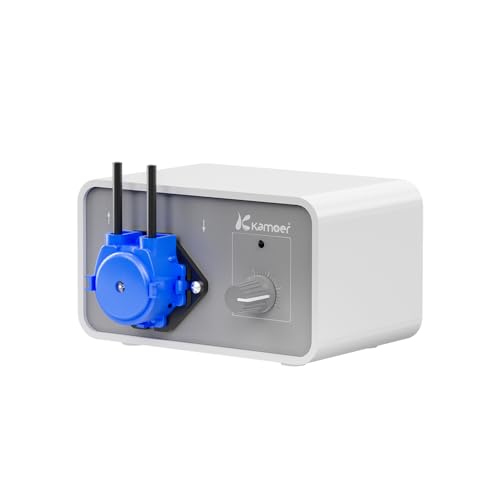
- Fine 5-30 ml/min adjustment
- Potentiometer knob for manual control
- Includes power adapter for quick setup
Best For: Precise low-flow dosing and small transfers
Budget-Friendly Lab Doser

- 5~100 mL/min flow range
- Handles viscous and non-viscous liquids
- Easy-to-disassemble pump head
Best For: Small bakery dosing tasks and general liquid transfer
High-Flow Bench Doser
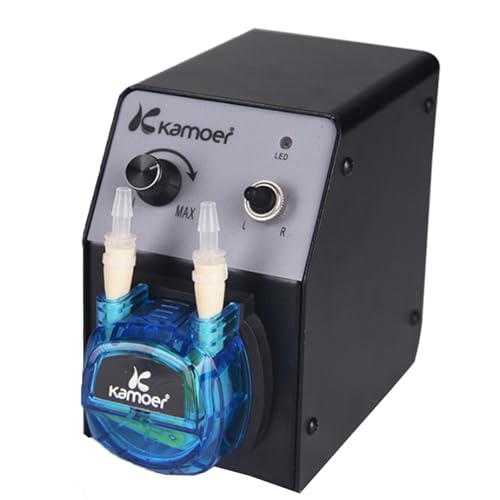
- 40~210 mL/min adjustable flow
- 12V DC with included adapter
- Compact 765g bench-friendly build
Best For: Compact bakery dosing with a wider flow range
Multi-Pack Utility Doser
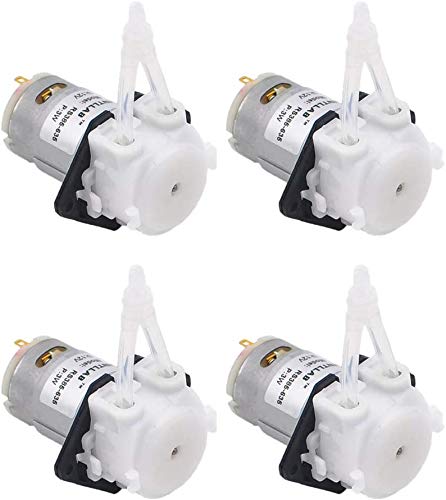
- 4 pumps included
- 5~100 mL/min flow range
- Reversible flow direction
Best For: Bakery setups needing multiple basic dosing pumps
Precision Doser for Small-Batch Liquids – AC Infinity Peristaltic Dosing Pump
For bakeries that need liquid dosing pumps for bakeries to meter ingredients with consistency, this peristaltic model is built around exact milliliter control. Its 10-level settings and high flow range make it a practical fit for controlled liquid additions where repeatability matters, while the sealed, leak-free design keeps the liquid isolated from the pump body.
Best For: Bakeries needing precise, low-contamination dosing for measured liquid additions.
Pros:
- 10-level control with 21 mL intervals for exact dosing adjustment
- High flow rate up to 210 mL per minute for faster dispensing
- Sealed, leak-free peristaltic design keeps liquids contained
- WiFi app control and AI/UIS compatibility support smart programming
Cons:
- Designed for dosing precision rather than large-volume filling
- Notes focus on hydroponics, aquariums, and labs rather than food production
- May be more advanced than needed for simple manual tasks
This is the strongest pick if your priority is exact liquid metering and low-noise operation. The controls and connectivity add flexibility, but its core value is clean, repeatable dosing.
Two-Channel Programmable Doser – Jecod DP-2 Auto Dosing Pump
When evaluating liquid dosing pumps for bakeries, a dual-channel unit like this is useful for handling two separate liquids on different schedules. It offers programmable dosing up to 24 times per day per channel, with a wide daily range and simple calibration, making it a straightforward option for routine measured dispensing.
Best For: Operations that need two independently scheduled dosing lines.
Pros:
- Two independent channels can be programmed separately
- Up to 24 dosing events per day per channel
- Wide dosing range of 1 to 9999 ml per day
- Simple calibration with a graduated cylinder or measuring cup
Cons:
- Tubing is sold separately
- Flow rate is relatively low at 6.9 mL per minute
- Product details are aimed at aquarium liquids, not bakery ingredients
This pump makes sense if you want scheduled automation more than high-speed output. The dual-head setup and per-day programming are its main strengths for repeatable dispensing tasks.
Automated Bottle Filler – Digital Peristaltic Filling Machine
For bakeries that already think in weighed or timed portions, this liquid dosing pump for bakeries is more of an automated filler than a tiny lab doser. It uses a peristaltic tube path, so the liquid only contacts the food-grade silicone tube, and it supports either weighing filling or timing filling for controlled batch work.
Best For: High-throughput filling jobs that benefit from weighing or timed automation.
Pros:
- Choice of weighing filling or timing filling modes
- Food-grade silicone tube keeps liquid out of the machine body
- Stores 6 sets of data for repeated setups
- Automatic slow-down and stop functions improve fill consistency
Cons:
- Bulkier and heavier than compact dosing pumps
- Configured for bottles from 1 to 105 oz, which may be larger than bakery portions
- Product details are geared toward wine, juice, oil, and perfume
This is the best fit when speed and repeatable fill control matter more than compact size. Its automation features are helpful, but it is better suited to filling workflows than ultra-small ingredient dosing.
Compact Low-Flow Doser – KCP-X Mini Peristaltic Pump
If you need liquid dosing pumps for bakeries in a compact, simple form, this mini peristaltic pump offers low-flow control without much footprint. Its adjustable speed, small size, and easy-to-clean snap-fit head make it practical for light-duty dispensing where a modest flow range is enough.
Best For: Small setups that need an affordable, low-flow dosing pump.
Pros:
- Compact and lightweight design is easy to place
- Adjustable flow rate from 19 to 65 mL per minute
- Snap-fit pump head has no valves or seals
- Easy hose replacement and straightforward cleaning
Cons:
- Lower flow range limits larger output tasks
- Single-pump, basic design offers fewer automation features
- Notes emphasize aquarium, lab, and equipment use rather than food service
This is a sensible pick if you want a small, budget-friendly peristaltic pump for controlled dispensing. It stands out for simplicity and easy maintenance, not advanced scheduling or high-volume throughput.
Industrial Precision Doser – Adjustable 5-120 ml/min Peristaltic Pump
If you need liquid dosing pumps for bakeries for small-batch ingredient handling, this adjustable peristaltic pump is built around steady low-to-mid flow control. Its 5-120 ml/min range and continuous single-head design make it a practical fit for repeatable dispensing where consistency matters more than high volume.
Best For: Controlled dispensing in bakeries that need precise, continuous low-volume dosing.
Pros:
- Adjustable flow rate from 5 to 120 ml/min for flexible dosing control.
- Single-head peristaltic design supports steady stream output and durability.
- Easy to disassemble and maintain, which helps reduce downtime.
- AC100V-240V operation with US plug adds simple power compatibility.
Cons:
- Listed use cases are industrial and laboratory-focused, not bakery-specific.
- Single-head setup may be better for one fluid line at a time.
For bakeries that want a dependable dosing pump for measured ingredient transfer, this model emphasizes controllable flow and straightforward maintenance. It looks best suited to repeatable dispensing tasks rather than heavy-duty or highly specialized food production.
Compact 12V Mini Pump – Snap-In Peristaltic Dosing Head
For buyers comparing liquid dosing pumps for bakeries, this compact 12V peristaltic head is a small, simple option for light dispensing and transfer tasks. It offers 0-100 ml/min flow, a snap-in head for easier tube changes, and a compact form that can suit tight workspaces.
Best For: Light-duty ingredient transfer or dispensing where compact size and simple tube changes matter.
Pros:
- 0-100 ml/min flow range supports low-rate dispensing.
- Snap-in design makes tube replacement and cleaning more convenient.
- Compact 12V format is easy to place in small setups.
- Includes a 5-meter maximum lifting height according to the listing.
Cons:
- Not recommended for prolonged use.
- Drive is not included and must be purchased separately.
- Listing is aimed at DIY, lab, and aquarium use rather than bakery production.
This pump makes sense if you need a basic, compact dosing head for lighter applications and easy maintenance. Its limitations on continuous use mean it is better suited to occasional or short-run tasks than demanding bakery workflows.
Low-Flow Control Pump – 12V Adjustable 5-30 ml/min Doser
If you want liquid dosing pumps for bakeries that focus on fine control, this 12V peristaltic pump is designed for low-flow transfer and dosing. Its 5-30 ml/min adjustable range, simple potentiometer control, and compact structure make it a straightforward choice for measured dispensing tasks.
Best For: Precise low-flow dosing in bakery-related ingredient handling and small transfer jobs.
Pros:
- Adjustable 5-30 ml/min flow rate supports precise low-volume dosing.
- Manual potentiometer knob gives simple speed adjustment.
- Compact structure and easy tubing replacement help simplify maintenance.
- Includes a 12V power adapter for immediate use.
Cons:
- Brush motor has a limited lifespan.
- Not recommended for prolonged continuous operation.
- Listed applications are laboratory and factory focused, not bakery-specific.
Overall, this model is a practical pick when accuracy and small flow rates matter more than long continuous duty. For bakeries, it fits best as a compact dosing tool for controlled transfer rather than a heavy-production pump.
Budget-Friendly Lab Doser – INTLLAB DIY Peristaltic Pump
If you need liquid dosing pumps for bakeries for small transfer tasks, this INTLLAB peristaltic pump is a simple, low-cost option to consider. It handles viscous and non-viscous liquids, offers a 5~100 mL/min flow range, and is easy to disassemble for cleaning and maintenance.
Best For: Small bakery dosing tasks where you want an inexpensive, easy-to-clean pump for general liquid handling.
Pros:
- Handles both viscous and non-viscous liquids.
- Flow rate is adjustable from 5~100 mL/min.
- Pump head is designed for easy disassembly and cleaning.
- Compact and portable for wide use.
Cons:
- Flow speed is only indicated by LED brightness, which is less precise than a digital display.
- Specific use is listed for aquarium and lab-style applications, not bakery equipment.
For bakers who want a straightforward dosing pump for basic ingredient transfer, this model covers the essentials without adding complexity. Its broad liquid compatibility and simple maintenance make it practical for routine small-batch use.
High-Flow Bench Doser – KCP PRO2 Peristaltic Pump
For buyers comparing liquid dosing pumps for bakeries, the KCP PRO2 stands out for its wider flow range and simple speed control. It delivers 40~210 mL/min, runs on 12V DC with an included adapter, and has a compact footprint that suits crowded work areas.
Best For: Bakery users who need a compact pump with a wider adjustable flow range for dosing or transfer tasks.
Pros:
- Wide adjustable flow range from 40 to 210 mL/min.
- 12V DC operation includes a power adapter for immediate use.
- Compact and lightweight design fits small spaces.
- Tool-free tubing changes help keep workflow efficient.
Cons:
- The product notes focus on lab, industrial, and aquarium use rather than bakery-specific applications.
- Heavier than the smallest DIY-style pumps at 765g with power supply.
This is a good pick if your priority is adjustable output and a bench-friendly size. The higher maximum flow makes it more flexible for transfer and dispensing tasks than slower mini pumps.
Multi-Pack Utility Doser – INTLLAB 4-Pack 12V Pump
If you are shopping for liquid dosing pumps for bakeries and want a multi-unit option, this 4-pack INTLLAB set is built for basic liquid transfer and dosing. It supports viscous and non-viscous liquids, offers a 5~100 mL/min flow rate, and allows flow direction changes through positive and negative connection.
Best For: Bakery setups that need several simple pumps for small liquid transfer or dosing jobs.
Pros:
- Includes 4 pumps in one pack.
- Works with viscous and non-viscous liquids.
- Flow direction can be changed by reversing the connection.
- Pump head is easy to disassemble, clean, and maintain.
Cons:
- Flow rate tops out at 100 mL/min, so it is not the fastest option.
- Listing is oriented toward water treatment and lab use rather than bakery-specific service.
This pack makes sense when you need multiple basic dosing pumps instead of a single higher-end unit. The simple design, reversible direction, and easy maintenance should suit light-duty ingredient handling.
How We Picked These Liquid Dosing Pumps for Bakeries
We selected pumps based on dosing range, flow control, build style, and suitability for food-adjacent ingredient transfer. For bakeries, the most useful models are those that offer stable low-flow performance, adjustable output, and easy integration into a production setup.
We also favored pumps that make sense for common bakery tasks such as measured dispensing, ingredient transfer, and repeatable filling. Because these pumps are often used across multiple industries, we prioritized features that translate well to bakery use: consistent flow, simple controls, and compatibility with viscous or delicate liquids.
Quick Comparison
Low-flow pumps are usually best for precise dispensing of flavorings, extracts, concentrates, and additives. Mid-range units work better when you need a balance of accuracy and speed for syrups or batters. Higher-flow models are more appropriate for larger-volume transfer and faster filling, especially in small production lines.
If your operation needs exact portioning, choose a pump with fine speed adjustment and stable repeatability. If throughput matters more, look for a higher flow ceiling and durable tubing that can handle frequent use.
Key Buying Factors for Liquid Dosing Pumps for Bakeries
Flow Range and Precision
Match the pump’s output range to what you actually dispense. Very small flows are better for concentrated ingredients, while higher-flow models are more efficient for larger fills. A wide adjustment range is helpful if your recipes vary a lot.
Ingredient Compatibility
Check whether the tubing and wetted materials suit oils, syrups, water-based liquids, and other bakery ingredients. For food use, material compatibility matters as much as speed because it affects cleanliness, durability, and product transfer consistency.
Control and Repeatability
Look for clear speed settings, programmable options, or easy manual calibration. Repeatable dosing is essential in bakeries where the same fill weight or volume must be delivered across many batches.
Cleaning and Workflow Fit
Choose a pump that fits your cleanup routine and space. Compact units are easier to place near prep tables, while multi-channel or programmable systems can support more complex production setups.
Who Should Buy Which Liquid Dosing Pumps for Bakeries?
Small bakeries and test kitchens should prioritize low-flow, adjustable pumps for precise ingredient dosing. Growing operations may benefit from mid-range or programmable models that improve consistency across multiple recipes.
If your main goal is fast transfer rather than exact micro-dosing, a higher-flow pump is the better fit. For bakeries with varied ingredient types, flexibility and control are more valuable than raw speed alone.
In short, the best Liquid Dosing Pumps for Bakeries are the ones that match your ingredient viscosity, batch size, and accuracy needs without adding unnecessary complexity.