Accurate date marking helps bakeries stay organized, reduce waste, and present packaging professionally. The right coder can also speed up labeling across breads, pastries, and packaged goods.
Below, we focus on practical bakery date coding machines that balance ease of use, print quality, and the flexibility to handle everyday production needs.
Best 10 Bakery Date Coding Machines Picks for 2026
Manual Date Stamper
Adjustable 2018-2029 Coding Machine
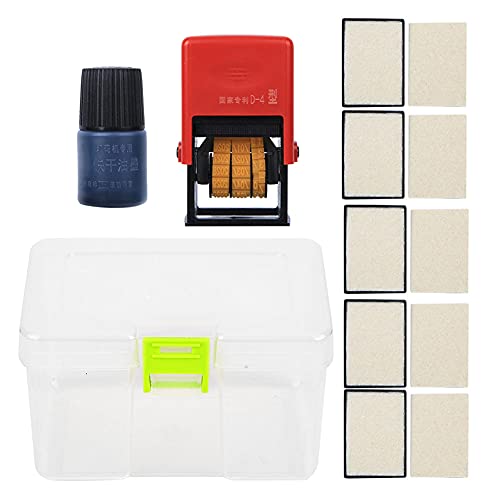
- Adjustable date range from 2018 to 2029
- Quick-drying ink dries in about 3 seconds
- Automatic ink absorption helps with repeated printing
Best For: Bakeries and food shops needing simple manual date marks
Handheld Inkjet Coder
Variable Data Printer for Multiple Surfaces

- Prints text, dates, lot numbers, barcodes, and QR codes
- Works on cardboard, plastic, metal, glass, and more
- 4.3-inch touch screen with USB import support
Best For: Portable variable-data coding across mixed packaging
Portable Card-Slot Coder
Manual Date Stamp with Included Accessories
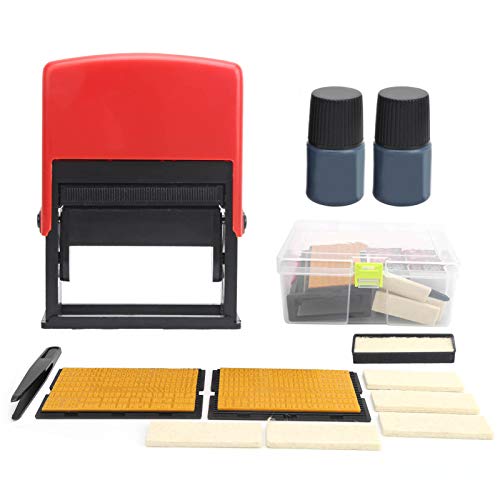
- Durable ABS, steel, and plastic construction
- Quick-drying ink is designed not to fade in 10 seconds
- Includes ink, pads, tweezers, and two font versions
Best For: Manual coding with a bundled accessory kit
Desktop Inkjet Coder
7-Inch Touch Screen Batch Printer

- Prints dates, lot numbers, barcodes, QR codes, and pictures
- Works on metal, plastic, cartons, glass, fabric, and more
- Two printing modes with adjustable positioning
Best For: Small to medium lines needing precise batch coding
Compact Manual Option
Yunseity Portable Smart Date Coding Machine

- Adjustable date range from 2018 to 2029
- Quick-drying ink sets in about 3 seconds
- Includes ink, 5 cartridges, 5 pads, and storage box
Best For: Small operations needing a portable manual date coder
Feature-Rich Touchscreen Pick
Phezer Automatic Continuous Inkjet Coding Machine

- Prints dates, text, barcodes, QR codes, logos, and images
- Works on porous and non-porous surfaces
- Includes a 5-inch touch screen and three print modes
Best For: Businesses needing flexible coding on different packaging materials
Portable Multi-Surface Coding
WUOYJET TIJ770 Handheld Inkjet Printer

- Prints dates, batch codes, QR codes, and barcodes
- Quick-dry black ink helps reduce smudging
- Works on cardboard, plastic, metal, fabric, and more
Best For: Bakery packaging teams needing portable marking across mixed surfaces
Manual Expiry Date Stamper
Adjustable Handheld Date Coding Machine

- Simple manual stamping for expiry dates and codes
- Quick-drying ink helps reduce smearing
- Works on flat, concave, and curved surfaces
Best For: Small bakery teams needing a basic manual dater
Touchscreen Batch Printer

- 5-inch touchscreen with three printing methods
- Prints dates, batch numbers, barcodes, QR codes, and more
- Quick-drying ink works on porous and non-porous surfaces
Best For: Bakeries needing flexible batch and date coding in a small-to-medium setup
Manual Date Stamper – Adjustable 2018-2029 Coding Machine
If you need a straightforward option among bakery date coding machines, this manual date printing machine focuses on fast, legible date marks for food packaging and labels. The adjustable gear makes it easy to update dates, while the quick-drying ink helps keep production moving without smudging.
Best For: Bakeries, restaurants, and grocery operations that need simple manual date coding on packaging.
Pros:
- Adjustable date range from 2018 to 2029
- Second-generation font version for clearer, cleaner imprints
- Quick-drying ink dries in about 3 seconds and resists fading
- Automatic ink absorption and continuous ink circulation support repeated use
Cons:
- Manual operation may be slower than powered printers
- Designed mainly for date and note marking, not variable data printing
For teams that want a compact, low-complexity dater, this model covers the basics well. It’s a practical pick when clarity, quick drying, and easy date changes matter more than advanced printing features.
Handheld Inkjet Coder – Variable Data Printer for Multiple Surfaces
For bakeries that need more than a basic dater, this handheld inkjet printer brings variable data printing to bakery date coding machines. It supports text, date, lot, barcode, and QR code printing, and it can mark many different materials with fast-drying black ink.
Best For: Businesses that need portable date, lot, and barcode printing on mixed packaging materials.
Pros:
- Supports text, production date, expiry date, lot numbers, barcodes, and QR codes
- Print height range of 2mm to 12.7mm with 1 to 5 lines
- Works on porous and non-porous surfaces including cardboard, plastic, metal, glass, and fabric
- 4.3-inch touch screen and USB import support simplify setup
Cons:
- May require a metal positioner for best results on curved or rough surfaces
- More complex than a basic manual date stamper
This is the most flexible option in the group if your packaging changes often. Its ability to print variable content on many surfaces makes it a strong fit for busy production or labeling workflows.
Portable Card-Slot Coder – Manual Date Stamp with Included Accessories
This portable coding machine is a practical choice if you want a manual option in the bakery date coding machines category. It uses quick-drying ink, includes multiple ink accessories, and is built to handle flat, concave, and curved surfaces.
Best For: Teams that want a durable manual coder with extra consumables included.
Pros:
- Made from ABS, steel, and plastic for durable everyday use
- Quick-drying ink is designed not to fade in 10 seconds
- High-definition dotting font version helps create clearer prints
- Includes ink, ink pads, ink box, tweezers, and two font versions
Cons:
- Manual stamping is less automated than inkjet systems
- Focuses on coding and stamping rather than broader print functions
If you want a hands-on coding tool with a fuller accessory kit, this model is a solid utility buy. It is especially useful when you need a simple, durable stamper that can adapt to different surface shapes.
Desktop Inkjet Coder – 7-Inch Touch Screen Batch Printer
Among bakery date coding machines, this tabletop inkjet coder is built for faster, more precise printing on packaging and product materials. With a 7-inch touch screen, adjustable positioning, and two print modes, it suits operations that need consistent date, lot, or barcode output.
Best For: Small to medium production lines that need accurate, high-speed batch coding.
Pros:
- Prints on metal, plastic, cartons, glass, fabric, wood, paper, and more
- Supports text, serial/lot numbers, barcodes, QR codes, dates, times, and pictures
- Adjustable positioning plate and two modes: foot pedal and hand press
- 7-inch touch screen and precise positioning support efficient operation
Cons:
- Tabletop design is less portable than handheld options
- Best suited for users who need more than basic manual dating
This model is a strong pick when speed and consistency matter more than portability. It brings more control than a manual stamper and can handle a wide range of packaging and product surfaces.
Compact Manual Option – Yunseity Portable Smart Date Coding Machine
If you need a simple entry in bakery date coding machines, this handheld Yunseity model focuses on fast manual printing with straightforward date changes. It uses an adjustable gear system for dates from 2018 to 2029, plus quick-drying ink designed to resist heat and fading, which can help keep packaging marks clean during busy shifts.
Best For: Small operations that want a portable, easy-to-adjust manual date coder for bags and packaging.
Pros:
- Adjustable date range from 2018 to 2029
- Quick-drying ink is rated to set in about 3 seconds
- Automatically rotates to absorb ink for lighter press-and-print use
- Includes ink, 5 cartridges, 5 pads, and a storage box
Cons:
- Manual operation may be slower than automated coding machines
- Best suited to basic date marking rather than complex variable printing
Overall, this is a practical low-complexity choice if your bakery needs simple expiry-date marking and portability matter more than advanced printing features.
Feature-Rich Touchscreen Pick – Phezer Automatic Continuous Inkjet Coding Machine
Among bakery date coding machines, the Phezer automatic continuous inkjet model stands out for businesses that need more than just date stamps. Its 5-inch touch screen, quick-drying ink cartridge, and support for text, barcodes, QR codes, logos, and time/date coding make it a flexible choice for mixed packaging tasks.
Best For: Small and medium businesses that want a touchscreen coder for date, barcode, and logo printing on varied materials.
Pros:
- Prints text, serial numbers, barcodes, QR codes, logos, and images
- Works on porous and non-porous materials like plastic, cartons, foil bags, glass, and metal
- 5-inch touch screen with an intuitive interface
- Offers foot pedal, hand press, and photoelectric sensor printing modes
Cons:
- Some accessory modes and features need to be purchased separately
- More advanced than a basic manual coder, so it may be more machine than a very small bakery needs
If you want a coder that can scale beyond simple expiry dates, this Phezer unit offers the most printing flexibility in the lineup while still staying compact enough for small-product labeling.
Bakery-Focused Manual Coder – VINGVO Ink Date Printing Machine
This VINGVO model is a straightforward pick for bakery date coding machines when you want a manual printer aimed at food bag labeling. It uses automatic ink absorption, quick-drying ink that sets in about 3 seconds, and a gear system for year changes from 2018 to 2029, making it a solid fit for daily expiry-date marking.
Best For: Bakeries, restaurants, and grocery counters that need a simple manual label printer for food packaging.
Pros:
- Designed for food bags, restaurants, bakeries, and grocery stores
- Quick-drying ink helps produce clean prints in about 3 seconds
- Adjustable year range from 2018 to 2029
- Includes an ink storage cartridge for continuous printing
Cons:
- Manual light-press operation is less automated than touchscreen or sensor models
- Focused on basic date coding rather than advanced content types
For bakeries that mainly need clear, durable date marks on packaging, this VINGVO machine keeps the workflow simple and the setup practical.
Portable Multi-Surface Coding – WUOYJET TIJ770 Handheld Inkjet Printer
If you need bakery date coding machines that can move from one packing task to another, this handheld inkjet printer is built for flexible on-the-spot marking. It prints dates, batch codes, QR codes, barcodes, logos, and images on cardboard, plastic, metal, fabric, cans, and more, making it a practical choice for mixed bakery packaging environments.
Best For: Bakery operations that need portable coding across different packaging materials and on-site workflows.
Pros:
- Prints date, batch, QR code, barcode, logo, and image content.
- Supports quick-dry black ink for cleaner marking and reduced smudging.
- Works on many surfaces, including cardboard, plastic, metal, fabric, and cans.
- Compact handheld design with touchscreen control and 30-language support.
Cons:
- Designed for handheld use, so it may not suit high-volume fixed-line packaging.
- Uses black ink only.
For bakeries that package across multiple materials, this model offers strong versatility and good coding flexibility. It makes the most sense when portability and varied print content matter more than a dedicated bench setup.
Manual Expiry Date Stamper – Adjustable Handheld Date Coding Machine
For simple bakery date coding machines that focus on basic expiry marking, this manual date printer keeps the workflow straightforward. It uses a stamping function with quick-drying ink and is designed for flat, concave, and curved surfaces, which makes it useful for smaller packaging tasks and varied container shapes.
Best For: Small bakery teams that want a simple manual dater for expiry markings on different surface shapes.
Pros:
- Manual stamping design keeps operation simple.
- Quick-drying ink helps limit smearing after printing.
- Works on flat, concave, and curved surfaces.
- Interchangeable font plate system supports flexible date or code setups.
Cons:
- Manual operation is better for light-duty use than fast production lines.
- Built mainly for date/code stamping, not broader printing tasks.
This is a practical option if you only need a basic handheld dater for expiry labels rather than a full-featured printer. It offers useful flexibility for small bakery packaging jobs without adding unnecessary complexity.
Touchscreen Batch Printer – BESHENG 5-Inch Inkjet Coder
This inkjet coder is a strong fit for bakery date coding machines when you want more control over what gets printed and how. With a 5-inch touchscreen, quick-drying 42ml ink cartridge, and support for dates, times, batch numbers, barcodes, QR codes, labels, and pictures, it is built for organized product marking on packaging lines and work areas.
Best For: Bakeries that need a versatile coding machine for batch, date, and barcode printing in a small-to-medium production setup.
Pros:
- Prints text, dates, times, batch/lot numbers, barcodes, QR codes, labels, and pictures.
- Fast-drying ink is suitable for porous and non-porous surfaces.
- Offers three printing methods: foot pedal, hand press, and photoelectric sensor.
- 5-inch touchscreen and adjustable positioning support easier setup.
Cons:
- Best suited to flat surfaces and smaller to medium-sized products.
- More complex than a basic manual date stamper.
If your bakery needs a more capable coding setup than a simple date stamp, this model offers much broader print options and better process control. It is especially appealing when packaging variety and code consistency both matter.
How We Picked the Best Bakery Date Coding Machines
We prioritized machines that fit real bakery workflows: clear date output, quick setup, dependable printing on common packaging surfaces, and manageable maintenance. We also looked at portability, ink options, and whether a model is better for short-run manual labeling or higher-volume continuous coding.
Quick Comparison: Manual Vs. Handheld Vs. Continuous Inkjet
Manual stamp-style and labelers are usually the simplest and most affordable, making them a strong fit for small bakeries with limited packaging variety. Handheld inkjet models add more flexibility for printing batch codes, dates, and lot numbers on bags, cartons, and some nonporous materials. Continuous inkjet systems are better for businesses that need faster, more consistent output and expect steady daily use.
Key Buying Factors for Bakery Date Coding Machines
Print Clarity and Character Size
Look for crisp, legible codes that remain easy to read after sealing, stacking, or refrigeration. Adjustable character height is helpful when you need to print on narrow labels or larger package panels.
Ink Compatibility and Dry Time
For bakery packaging, quick-drying ink reduces smudging and keeps lines moving. If you print on coated bags, film, or plastic, verify that the ink is compatible with the surface.
Ease of Operation
Simple controls matter in busy kitchens. Touchscreens, clear menus, and straightforward date-setting can save time and reduce mistakes during shift changes.
Portability and Production Volume
Smaller operations may prefer a handheld or manual unit that can move between prep and packing areas. Higher-volume bakeries may benefit from a more automated system with steadier throughput.
Maintenance and Consumables
Check cartridge availability, cleaning requirements, and how often the device needs servicing. A machine that is easy to refill and clean is usually more practical over the long term.
Who Should Buy Which Bakery Date Coding Machines?
Choose a manual date coder if you want a low-complexity option for occasional labeling. Pick a handheld inkjet model if your bakery needs flexibility across different package types. Go with a continuous inkjet machine if you want faster output and more consistent coding for regular production runs. The best Bakery Date Coding Machines are the ones that match your packaging materials, daily volume, and team’s comfort with setup and maintenance.