Choosing the best citrus juicer for a restaurant depends on service volume, staff workflow, available counter space, and the fruits on your menu. The right machine can improve speed, consistency, and cleanup while reducing strain during busy shifts.
This roundup compares 10 commercial-ready options, from compact manual presses to high-capacity electric juicers, so you can match equipment to your bar, kitchen, café, or juice station.
Best 10 Citrus Juicer for Restaurant Picks for 2026
Heavy-Duty Manual Pick
Nemco 55850 Easy Citrus Juicer

- Rack-and-pinion system supports consistent pressure
- Durable aluminum and stainless steel construction
- Removable cone and NSF listing support food-service use
Best For: Restaurants and cafés needing a robust manual citrus press
Compact High-Volume Option
Winco JC-19 Manual Juice Squeezer
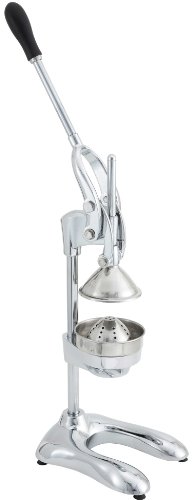
- Commercial-grade stainless steel construction
- Compact footprint for crowded kitchen layouts
- Suitable for lemons, limes, oranges, and grapefruit
Best For: Cafés and juice bars with limited counter space
Assisted Electric Press
Breville 800CPXL Citrus Press Pro
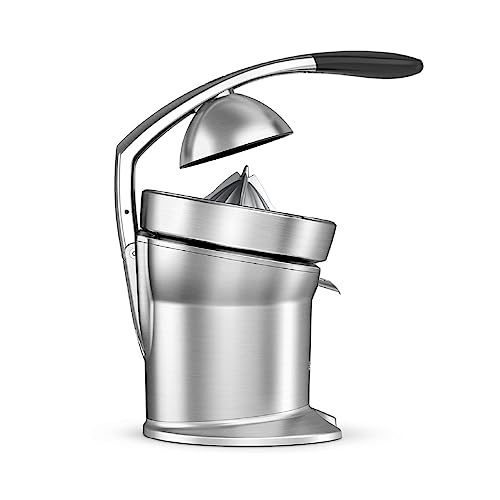
- Power-assisted lever reduces pressing effort
- Acid-resistant die-cast construction
- Removable components are dishwasher safe
Best For: Service counters prioritizing convenience and easy cleanup
Maximum-Force Classic

- Applies up to 2,000 pounds of manual force
- Acid-resistant finish and sure-grip feet
- NSF certified with removable cleaning parts
Best For: Commercial kitchens needing stable, high-force manual extraction
High-Volume Pick
Breville Juice Fountain XL Pro

- Variable-speed commercial centrifugal juicer
- 3.5-inch chute reduces prep time
- 70-ounce jug and 115-ounce pulp bin
Best For: Busy restaurants and bars juicing citrus plus other produce
Compact Citrus Specialist
Waring Compact Electric Citrus Juicer

- Compact footprint for small counters
- Universal reamer handles citrus varieties
- Up to 120 oranges per hour
Best For: Small bars and restaurants focused on citrus service
Manual Press Value

- Electricity-free cast-iron citrus press
- Long lever and stable suction base
- Removable dishwasher-safe strainer
Best For: Quiet, low-to-moderate-volume café and bar service
Quiet Countertop Workhorse
Hamilton Beach FreshMark HCJ967R
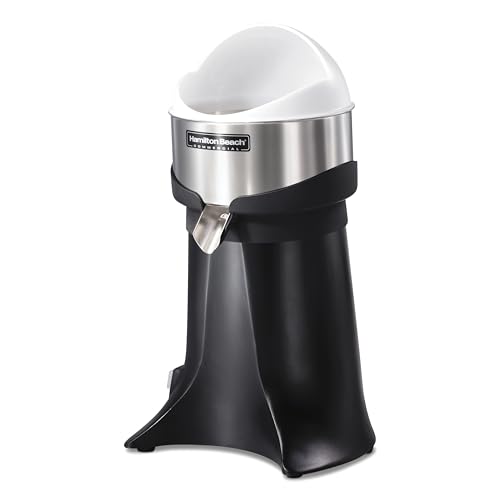
- Quiet 160W brushless induction motor
- Three reamers for varied citrus
- Tall spout and removable cleaning parts
Best For: Quiet, versatile countertop juicing in restaurants and bars
High-Volume Batch Extractor
VEVOR 100W Commercial Orange Juicer

- Processes up to 132–176 lb per hour
- Over-80% claimed juice yield
- Basket, filtration, and peel collection system
Best For: High-volume citrus processing with prepared fruit
Automated Service Line Press

- Peels, juices, and filters automatically
- Rated for up to 20 oranges per minute
- 304 stainless steel with safety cover sensor
Best For: Fast whole-fruit juicing in busy commercial settings
Heavy-Duty Manual Pick – Nemco 55850 Easy Citrus Juicer
For a busy restaurant needing a dependable citrus juicer for restaurant service, the Nemco 55850 emphasizes consistent manual extraction, durable construction, and straightforward upkeep. Its rack-and-pinion system and removable strainer cone suit regular commercial use.
Best For: Restaurants, cafés, juice bars, and operators who want a sturdy manual press with NSF listing.
Pros:
- Stainless steel rack-and-pinion system supports smooth, uniform pressure.
- Aluminum and stainless steel construction is designed for heavy-duty use.
- Removable strainer cone simplifies cleaning and maintenance.
- Ergonomic handle helps reduce strain during repeated pressing.
Cons:
- Manual operation requires physical effort for every serving.
- Hand-wash-only care takes more time than dishwasher-safe alternatives.
- The tall 19.25-inch profile may require careful counter placement.
The Nemco is a strong fit when durability, control, and food-service-oriented design matter more than automation. Its manual format keeps operation simple while the removable cone supports daily sanitation.
Compact High-Volume Option – Winco JC-19 Manual Juice Squeezer
The Winco JC-19 is a practical citrus juicer for restaurant settings that need a compact manual extractor for lemons, limes, oranges, or grapefruit. Its commercial-grade stainless steel design is intended for busy kitchens, cafés, and juice bars.
Best For: Cafés, juice bars, and commercial kitchens seeking a portable manual squeezer with a small footprint.
Pros:
- Commercial-grade construction is suited to frequent kitchen use.
- Compact footprint can fit into tighter work areas.
- Designed to reduce effort while maximizing juice yield.
- Handles common citrus fruits including grapefruit, lemons, and oranges.
Cons:
- Manual operation may be slower for continuous high-volume service than an electric press.
- Hand-wash-only care adds a cleaning step.
- The 0.5-liter capacity is modest for larger batch preparation.
Choose the Winco when counter space and straightforward operation are priorities. It offers a commercial-oriented build without adding a complicated control system.
Assisted Electric Press – Breville 800CPXL Citrus Press Pro
The Breville 800CPXL offers a convenient electric alternative for a citrus juicer for restaurant service, combining a power-assisted lever with a finned cone designed to extract juice from different citrus sizes. Dishwasher-safe removable parts also help streamline cleanup.
Best For: Restaurants, cafés, and bars that value assisted pressing, adjustable pulp control, and easier cleanup.
Pros:
- Power-assisted lever makes pressing citrus less labor-intensive.
- Quadra-Fin cone is designed for lemons, limes, oranges, and grapefruit.
- Acid-resistant die-cast cone and body help withstand citrus exposure.
- Juicing cone, collector, filter, and dome are dishwasher safe.
Cons:
- Its 800 ml capacity may require refilling during larger service periods.
- Requires a corded electrical outlet and provides only one speed.
- A one-year limited warranty is shorter than a lifetime coverage promise.
The Breville is a good choice when staff comfort and cleanup convenience outweigh the simplicity of a fully manual press. Its active arm and dishwasher-safe components make it especially appealing for steady à la carte service.
Maximum-Force Classic – Hamilton Beach Commercial 932
The Hamilton Beach Commercial 932 is a force-focused citrus juicer for restaurant use, applying up to 2,000 pounds of manual pressure to extract juice from common citrus fruits. Its acid-resistant finish, sure-grip feet, and NSF certification support commercial operation.
Best For: Restaurants and bars seeking a stable manual press with high extraction force and food-service certification.
Pros:
- Extractor arm delivers up to 2,000 pounds of force for high juice output.
- Metal components and enamel finish resist wear from citrus acids.
- Sure Grip feet help prevent tipping during use.
- Removable strainer cone and funnel simplify cleaning and sanitizing.
Cons:
- Manual pressing still requires staff effort.
- Removable parts are hand-wash only.
- The 8-fluid-ounce capacity is limited for batch juicing.
The 932 stands out for operators who want strong extraction and a stable countertop footprint without adding electrical components. Its NSF certification and removable parts are useful advantages in food-service environments.
High-Volume Pick – Breville Juice Fountain XL Pro
For a restaurant that needs a versatile citrus juicer for restaurant service, the Breville Commercial Juice Fountain XL Pro combines high capacity with adjustable centrifugal juicing. Its wide chute, large jug, and pulp bin help reduce prep and interruption when processing oranges, lemons, and other produce.
Best For: Busy restaurants and bars that need to juice citrus alongside fruits and vegetables.
Pros:
- Variable-speed control helps optimize juice yield across different produce.
- Extra-wide 3.5-inch feed chute allows many whole fruits to be loaded without pre-cutting.
- Large 70-ounce juice jug and 115-ounce pulp bin support longer production runs.
- Stainless steel construction, Cold Spin Technology, and dishwasher-safe care add practical convenience.
Cons:
- The centrifugal design is more equipment than a citrus-only operation may need.
- Its 1200-watt motor and larger footprint may be excessive for very small counters.
- The commercial warranty is limited to one year.
This is the most flexible choice of the three if your kitchen juices citrus as well as carrots, apples, ginger, wheatgrass, and other produce. Choose it when capacity and versatility matter more than a compact citrus-only setup.
Compact Citrus Specialist – Waring Compact Electric Citrus Juicer
The Waring Compact Electric Citrus Juicer is a focused citrus juicer for restaurant counters where space and straightforward operation are priorities. Its universal reamer handles different citrus fruits, while the compact design and 120-orange-per-hour capacity suit bar and restaurant service.
Best For: Small bars, cafés, and restaurants that primarily juice citrus in limited counter space.
Pros:
- Compact 7.25-by-7.25-inch footprint fits smaller work areas.
- Universal reamer is designed for a range of citrus fruits.
- Rated capacity of up to 120 oranges per hour supports regular service.
- Die-cast base and vibration-dampening feet promote stable, quieter operation.
Cons:
- It is intended for citrus rather than general fruit and vegetable juicing.
- The one-speed design provides less control than a variable-speed model.
- The 1-quart capacity is smaller than the Breville’s included jug and pulp bin system.
For a dedicated citrus station, the Waring offers a simpler and more space-conscious alternative to a multipurpose juicer. It is a practical fit when orange, lemon, lime, and similar citrus service is the main requirement.
Manual Press Value – CO-Z Commercial Citrus Juicer
The CO-Z Manual Citrus Juicer is a commercial-style citrus juicer for restaurant operators who want a countertop press without relying on electricity. Its long lever, cast-iron body, stainless steel fruit-contact parts, and removable strainer make it suited to fresh juice and cocktail prep in cafés, bars, and restaurants.
Best For: Low-to-moderate-volume service where quiet, electricity-free citrus pressing is useful.
Pros:
- Manual operation avoids electrical power requirements and motor noise.
- Long ergonomic lever and nonslip suction base make pressing easier and steadier.
- 304 food-grade stainless steel fruit-contact parts and a stainless steel strainer support clean extraction.
- Removable, dishwasher-safe components simplify cleanup.
Cons:
- Manual pressing is slower and more labor-intensive than electric models for high-volume service.
- Its 0.8-liter capacity is limited for batch production.
- The press is focused on citrus and similar fruits rather than broad produce juicing.
This press makes sense when control, quiet operation, and a small countertop footprint matter more than maximum throughput. It can handle oranges, lemons, limes, grapefruits, and pomegranates, but high-volume restaurants may prefer an electric alternative.
Quiet Countertop Workhorse – Hamilton Beach FreshMark HCJ967R
For a citrus juicer for restaurant service that prioritizes quiet operation and straightforward cleanup, the Hamilton Beach FreshMark HCJ967R is built around a powerful 160-watt brushless induction motor. Its three interchangeable reamers cover lemons, limes, oranges, and grapefruit, while the tall open spout accommodates glasses, pitchers, and storage containers.
Best For: Restaurants and bars needing quiet, versatile countertop juicing for different citrus sizes.
Pros:
- Brushless induction motor is designed for quiet, long-term use.
- Three reinforced reamers handle lemons, limes, oranges, and grapefruit.
- Extra-tall 8.5-inch spout fills glasses, pitchers, and larger containers.
- Removable bowl collar, dishwasher-safe reamers, and bowl support easier cleaning.
Cons:
- At 28.1 pounds, it is not especially lightweight for frequent repositioning.
- Its 120-volt electric design requires a suitable outlet and countertop space.
This is a strong fit when staff need fresh juice across multiple citrus types without adding much noise to the dining area. The sealed switch, acid-resistant finish, and low-centered cast aluminum base further support regular commercial use.
High-Volume Batch Extractor – VEVOR 100W Commercial Orange Juicer
For a citrus juicer for restaurant operations that need substantial output, this VEVOR machine uses four rotating shaft assemblies and a physical pressing process rated for 132–176 pounds of citrus per hour. Its fruit basket, adjustable fitting knob, peel outlet, and built-in filtration are intended for continuous commercial-style workflow.
Best For: Beverage shops, restaurants, fruit stores, and other venues processing large batches of citrus.
Pros:
- Rated to process approximately 132–176 pounds of citrus per hour.
- Claims juice yield of over 80% using physical pressing.
- Large fruit basket allows refilling during operation.
- Built-in filter separates juice from pulp while a separate outlet directs peels to a bin.
Cons:
- Fruits must be washed, peeled, pitted, and cut to suitable sizes before juicing.
- Hand-wash-only care may require more staff cleanup time.
- At 51.4 pounds, it is a substantial machine to move or store.
This model makes the most sense when throughput matters more than compactness or minimal prep. The detachable cover and feed baffle suit commercial settings, but its larger footprint and manual fruit preparation should be planned for before purchase.
Automated Service Line Press – VEVOR 120W Orange Juicer
This VEVOR model is a citrus juicer for restaurant and retail environments that want automatic peeling, juicing, and filtering in one unit. Its 120-watt motor and textured juicing wheel are rated for up to 20 oranges per minute, while the large feed chute accepts qualifying citrus and pomegranates measuring 2.2–3.2 inches in diameter.
Best For: High-throughput restaurants, bars, grocery stores, and fruit shops serving whole-fruit juice.
Pros:
- Combines peeling, juicing, and filtering in one semi-automatic machine.
- Rated for up to 20 oranges per minute.
- Food-grade 304 stainless steel and detachable parts support cleaning.
- Transparent cover pressure sensor and water-resistant switch add operating safeguards.
Cons:
- Its 81.4-pound weight makes relocation difficult.
- The 25.59-inch width and 30.71-inch height require substantial counter or equipment space.
- Hand-wash-only care may be less convenient than dishwasher-safe components.
Choose this machine when speed and integrated handling are more important than a compact footprint. The stainless-steel construction, pull-out filter box, peel collection bucket, and included spare parts are practical for a busy commercial juice station.
How We Picked the Best Citrus Juicer for Restaurant
We focused on the factors that matter in professional food-service settings: throughput, construction, ease of operation, cleaning requirements, footprint, versatility, and likely durability under repeated use. The selection includes manual citrus presses for controlled, lower-volume service and electric machines for restaurants that need faster output.
We also considered practical details such as removable strainers, acid-resistant finishes, stable bases, ergonomic handles, motor power, and the types of citrus each machine can process. Product specifications and stated capacities should be verified against your expected workload before purchase.
Quick Comparison
| Type | Best for | Main advantage | Trade-off |
|---|---|---|---|
| Manual crank or lever press | Bars, cafés, and moderate service | Quiet operation and simple maintenance | Requires staff effort |
| Compact electric juicer | Fast drink preparation | Less manual labor | Needs power and regular cleaning |
| High-capacity electric machine | Juice bars and heavy breakfast service | Higher throughput | Greater cost and counter space |
| Commercial centrifugal juicer | Mixed juice programs | Handles more than citrus | May be less specialized for citrus |
Key Buying Factors for a Citrus Juicer for Restaurant Use
Volume and Speed
Estimate how many drinks or servings you will prepare during your busiest 15-minute period, not just your daily total. Manual models suit made-to-order service and moderate demand, while electric options are more appropriate for brunches, juice bars, buffets, and high-volume takeout.
Fruit Compatibility
Check whether the juicer accommodates lemons, limes, oranges, and grapefruits. Cone size and feed opening are especially important if your menu uses multiple citrus varieties.
Construction and Stability
Look for stainless steel or corrosion-resistant components, sturdy frames, secure feet, and finishes designed to withstand acidic juice. A stable base helps prevent spills and makes repetitive pressing safer.
Cleaning and Sanitation
Removable cones, strainers, bowls, and pulp containers simplify end-of-shift cleaning. Confirm that parts can be washed and sanitized according to your local food-safety procedures, and consider how quickly staff can disassemble the unit.
Space, Noise, and Power
Measure the available counter and storage space before ordering. Electric machines add speed but may introduce motor noise, cord-management concerns, and additional electrical requirements. Manual presses are often easier to place in a front-of-house bar.
Who Should Buy Which Citrus Juicer for Restaurant?
Choose a manual press if you run a cocktail bar, café, or restaurant with moderate citrus demand and want quiet, dependable equipment with minimal electrical maintenance. A heavy-duty lever or crank model is particularly useful when staff need precise control and fresh juice on demand.
Choose a compact electric citrus juicer when speed and reduced operator effort are more important than completely silent operation. These models work well for busy beverage stations with consistent orange, lemon, or lime orders.
Choose a high-capacity electric citrus machine when your operation serves large breakfast crowds, sells bottled or takeaway juice, or needs continuous output. For restaurants that also prepare vegetable or mixed fruit juices, a commercial centrifugal model may offer broader utility than a citrus-only press.
Before buying, compare the manufacturer’s capacity claims with your real service pattern, confirm replacement-part availability, and make sure the unit’s cleaning routine fits your staffing and sanitation procedures.