Gluten-free dough can be sticky, delicate, and inconsistent, so the right mixer makes a real difference. If you bake breads, pizza, or enriched doughs often, a dependable machine can save time and improve texture.
This roundup of dedicated gluten free stand mixers focuses on capacity, motor strength, mixing style, and everyday usability so you can choose with confidence.
Best 10 Dedicated Gluten Free Stand Mixers Picks for 2026
Heavy-Duty Family Batch Pick
Bosch Universal Plus 6.5-Quart Mixer
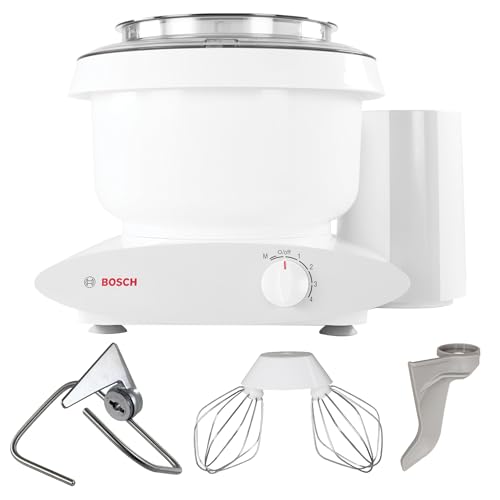
- 6.5-quart BPA-free bowl with easy-clean design
- 500W belt-driven motor for dough and whipping
- Optional attachments expand its versatility
Best For: Large gluten-free batches and multi-task home bakers
Classic Compact Pick
KitchenAid Classic 4.5-Quart Tilt-Head

- 4.5-quart stainless bowl for everyday baking
- 10 speeds and tilt-head access
- Durable metal build with attachment support
Best For: Smaller gluten-free baking and everyday home use
Commercial Capacity Pick
ZACME 8.4QT NSF-Style Stand Mixer

- 8.4-quart bowl for bulk baking and big doughs
- 800W motor with 11 speeds and timer
- Low-noise operation with NSF/ANSI 8-2023 rating
Best For: Large gluten-free batches and frequent heavy mixing
Mid-Size Premium Pick
KitchenAid Artisan 5-Quart Pistachio

- 5-quart bowl fits everyday gluten-free baking
- 10 speeds and tilt-head convenience
- Includes pouring shield and extended protection
Best For: Regular home baking with a balanced bowl size
Compact Starter Pick
Kitchen in the box 3.2Qt Small Stand Mixer
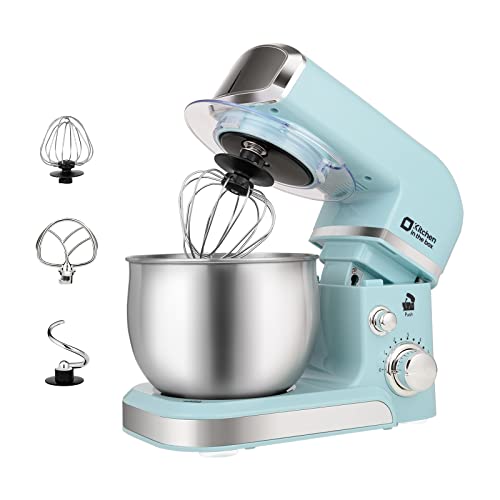
- Lightweight 7 lb design
- 3.2-quart bowl for small batches
- 6 speeds with suction bases
Best For: small kitchens and small-batch baking
Precision Dough Choice

- Spiral mixing for dough development
- 58 speed settings for precise control
- 7.3-quart capacity with four attachments
Best For: serious dough-focused home baking
Heavy-Duty All-Rounder
KitchenAid 5.5-Qt Bowl-Lift Stand Mixer
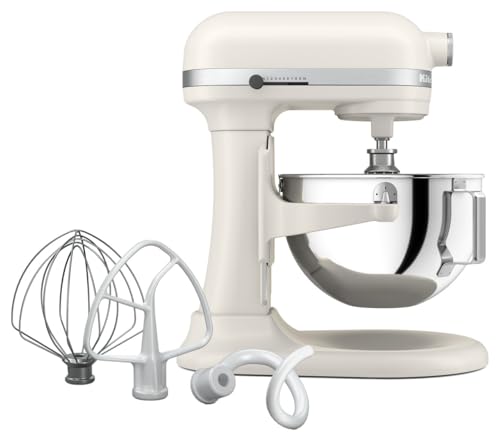
- 11 speeds for mixing and folding
- 5.5-quart bowl for larger batches
- 3-point locking bowl for stability
Best For: frequent bakers wanting power and capacity
Heavy-Batch Power
NutriMill Artiste 6.5-Qt Stand Mixer

- 6.5-quart bowl for large batches
- 500W bottom-drive motor for dough
- Suction feet improve countertop stability
Best For: Bakers needing a stable mixer for heavier dough and large batches
Quiet Family Mixer

- 700W motor with low-noise operation
- 6.5-quart bowl for family-sized batches
- Dishwasher-safe whisk, hook, and beater
Best For: Home bakers who want quieter mixing and easy cleanup
Precision Dough Control
6.5QT Heavy-Duty Tilt-Head Mixer

- 10 speeds plus pulse mode
- 63-point planetary mixing for even results
- Copper motor aimed at quiet dough kneading
Best For: Bakers who want precise control and even mixing
Heavy-Duty Family Batch Pick – Bosch Universal Plus 6.5-Quart Mixer
If you want dedicated gluten free stand mixers for frequent dough work, the Bosch Universal Plus is built around capacity and power. Its 6.5-quart bowl, bottom-drive design, and included dough hook extender make it practical for mixing larger gluten-free batches with less fuss, while the dual beaters help with lighter tasks like whipping and mashing.
Best For: Bakers who need a large, versatile mixer for heavy batches, frequent dough, and multi-use kitchen jobs.
Pros:
- 6.5-quart BPA-free bowl with handle and dishwasher-safe cleanup.
- 500-watt belt-driven system handles dough, cookies, whipping, and mashing.
- Bottom-drive layout makes ingredient adding easier during mixing.
- Optional attachments can expand the mixer into a kitchen machine.
Cons:
- Plastic bowl may not appeal to buyers who prefer metal.
- Only 4 speeds, so it offers less fine control than some rivals.
- Some accessories are sold separately.
Overall, this Bosch stands out when batch size and dough-handling matter more than compact size. It is a strong fit for gluten-free bakers who want a hardworking machine that can also take on other prep tasks.
Classic Compact Pick – KitchenAid Classic 4.5-Quart Tilt-Head
For shoppers comparing dedicated gluten free stand mixers, the KitchenAid Classic Series is a straightforward option with a familiar tilt-head layout and enough capacity for many home baking jobs. Its 4.5-quart stainless steel bowl, 10 speeds, and durable metal build make it a practical pick for everyday mixing, especially when you want a smaller footprint than larger heavy-duty machines.
Best For: Home bakers who want a dependable, smaller stand mixer for standard gluten-free recipes and everyday use.
Pros:
- Durable metal construction with 59 touchpoints for thorough mixing.
- 4.5-quart stainless steel bowl is dishwasher safe.
- 10 speeds cover stirring, mixing, and whipping tasks.
- Compatible with many KitchenAid attachments sold separately.
Cons:
- Smaller bowl than larger batch-focused mixers.
- 275-watt motor is less powerful than heavy-duty alternatives.
- Accessory expansion requires separate purchases.
This model makes sense if you value a proven design and easier storage over maximum capacity. It is especially appealing for smaller gluten-free baking projects where simplicity matters.
Commercial Capacity Pick – ZACME 8.4QT NSF-Style Stand Mixer
Among dedicated gluten free stand mixers, the ZACME 8.4QT is the most capacity-driven option here. Its 800W DC motor, 11 speeds, and large stainless steel bowl are designed for frequent mixing and kneading, while the low-noise operation and timer function add convenience for long baking sessions.
Best For: Bakers who want a large, quiet, high-capacity mixer for heavy gluten-free doughs and bulk batches.
Pros:
- 8.4-quart bowl suits large families and bulk baking.
- 800W motor with 11 speeds handles high-intensity kneading.
- Digital display and countdown timer help with multitasking.
- Meets NSF/ANSI 8-2023 standard for commercial use.
Cons:
- Larger footprint and 33-pound weight reduce portability.
- Price and feature set may be more than casual bakers need.
- Tilt-head design may be bulkier than simpler compact mixers.
If your gluten-free baking is frequent and often happens in large batches, this ZACME offers serious mixing capacity. It is a strong match for users who want commercial-style performance at home.
Mid-Size Premium Pick – KitchenAid Artisan 5-Quart Pistachio
If you want dedicated gluten free stand mixers with a more balanced size, the KitchenAid Artisan 5-quart model is a strong middle-ground choice. It offers the familiar tilt-head design, 10 speeds, and a stainless steel bowl with handle, making it practical for everyday gluten-free baking without moving into oversized, commercial-style territory.
Best For: Bakers who want a stylish, mid-size mixer for regular gluten-free cookies, batters, and medium dough batches.
Pros:
- 5-quart stainless steel bowl handles small to medium batches.
- 10 speeds support a wide range of mixing tasks.
- Tilt-head design improves bowl access and ingredient adding.
- Includes pouring shield plus a 1-year extended protection pack.
Cons:
- 325-watt motor is not the strongest for very heavy doughs.
- Smaller capacity than large-batch mixers.
- Protection pack is bundled, but core mixer still sells as a premium choice.
This Artisan makes sense if you want a dependable everyday mixer with a bit more room than a compact model. It is a practical fit for bakers who value size, style, and proven KitchenAid basics.
Compact Starter Pick – Kitchen in the box 3.2Qt Small Stand Mixer
If you’re shopping for dedicated gluten free stand mixers for small-batch baking, this compact model is a practical entry point. Its 3.2-quart bowl, 6 speeds, and tilt-head design make it easy to handle everyday mixing tasks without taking up much counter space.
Best For: Small kitchens, apartments, and couples or 1–2 person households that want a lightweight mixer for everyday baking.
Pros:
- Compact size and 7 lb weight make it easy to store and move.
- 3.2-quart stainless steel bowl suits small batches.
- 6 speeds cover dough, batters, meringues, and whipped cream.
- Anti-splash lid and suction bases help keep mixing cleaner and steadier.
Cons:
- Smaller capacity may not suit larger gluten-free dough projects.
- 300W motor is aimed at daily use rather than heavy-duty baking.
- Best fit is limited to compact, small-batch needs.
This is a sensible choice if your priority is convenience over high capacity. For gluten-free baking in smaller quantities, it covers the basics well while staying easy to live with.
Precision Dough Choice – Ooni Halo Pro Spiral Mixer
Among dedicated gluten free stand mixers, this spiral mixer stands out for dough-focused performance. Its rotating bowl, spiral dough hook, and removable breaker bar are designed to develop stronger gluten networks, while 58 speed settings give you a lot of control for mixing, whisking, and beating.
Best For: Bakers who want a dough-first mixer with professional-style spiral mixing and fine speed control.
Pros:
- Spiral mixing technology is built for bakery-style dough development.
- 58 speed settings allow very precise control.
- 7.3-quart capacity gives room for larger dough batches.
- Includes four attachments for dough, whisking, and general mixing.
Cons:
- Heavier and larger than compact countertop mixers.
- Designed more around dough performance than simple everyday portability.
- May be more mixer than needed for occasional small-batch use.
If your gluten-free baking leans heavily on bread and pizza dough, this is the most specialized option in the group. It offers the kind of precision and mixing action serious home bakers tend to look for.
Heavy-Duty All-Rounder – KitchenAid 5.5-Qt Bowl-Lift Stand Mixer
For dedicated gluten free stand mixers that can handle bigger home-baking jobs, this KitchenAid bowl-lift model brings more power and control than a basic tilt-head design. With 11 speeds, a 5.5-quart bowl, and a 3-point locking bowl, it is set up for mixing, kneading, and folding a wide range of recipes.
Best For: Bakers who want a sturdy, high-capacity mixer for frequent gluten-free baking and versatile everyday use.
Pros:
- 2x the power in the bowl versus the referenced tilt-head model.
- 11 speeds provide broad control from folding to high-speed mixing.
- 5.5-quart bowl handles larger batches, including bread dough.
- 3-point locking bowl adds stability during tougher mixing jobs.
Cons:
- Bulkier than compact countertop mixers.
- Less convenient for very small kitchens or light storage space.
- Attachments beyond the included set are sold separately.
This is the most balanced pick if you want one mixer that can do more than occasional gluten-free baking. It offers capacity, stability, and speed range that make it a strong everyday workhorse.
Heavy-Batch Power – NutriMill Artiste 6.5-Qt Stand Mixer
If you want dedicated gluten free stand mixers that can handle thicker doughs and bigger home-baking batches, the NutriMill Artiste is built around power and stability. Its 6.5-quart bowl, bottom-drive motor, and included dough hook make it a practical pick for bread, pizza dough, and other mixed-by-hand recipes that need a strong kneading assist.
Best For: Bakers who want a stable, high-capacity mixer for heavier dough batches and frequent mixing.
Pros:
- 6.5-quart bowl handles large batches, including up to 8 lbs of dough.
- 500-watt motor drives power through the bottom for strong mixing performance.
- Suction cup feet help keep the mixer from “walking” on the counter.
- Includes dough hook, wire whips, lid, and recipe book.
Cons:
- Only 6 speeds, so it offers less fine control than some higher-speed models.
- Weighs 18.4 pounds, which is less convenient to move around.
Overall, the NutriMill Artiste is a solid choice if stability and batch size matter more than extra speed options. It looks especially useful for bakers who need one mixer to do steady work on dough-heavy gluten free recipes.
Quiet Family Mixer – Aifeel 6.5QT 700W Stand Mixer
Among dedicated gluten free stand mixers, this Aifeel model stands out for its quieter operation and family-friendly 6.5-quart capacity. The 700W DC motor, 7-speed control, and included dough hook, whisk, and flat beater make it a flexible everyday mixer for breads, cakes, and other home baking tasks.
Best For: Home bakers who want a quieter stand mixer with good capacity and easy cleanup.
Pros:
- 700W DC motor is paired with low-noise operation at about 55 dB.
- 6.5-quart stainless bowl is sized for family use and larger recipes.
- Comes with whisk, dough hook, flat beater, and splash guard.
- Attachments are dishwasher-safe for simpler cleanup.
Cons:
- Body is ABS rather than metal, which may matter if you want a more premium build.
- Best suited to 2-4 person families, so it may be small for very large-batch baking.
This is a practical all-rounder if you want a quieter mixer for regular gluten free baking without giving up bowl size or accessory variety. It balances everyday convenience with enough power for tougher dough work.
Precision Dough Control – 6.5QT Heavy-Duty Tilt-Head Mixer
If you’re comparing dedicated gluten free stand mixers and want more control over mixing, this 6.5-quart heavy-duty model is built for precision. It combines a 10-speed setup with a plus pulse mode, 63-point planetary mixing, and a copper motor designed for high-torque kneading of heavy bread and pizza dough.
Best For: Bakers who want precise speed control and even mixing for dough-heavy recipes.
Pros:
- 10 speeds plus pulse mode provide wide control for different batters and doughs.
- 63-point planetary mixing helps blend ingredients evenly from bowl edge to bottom.
- Pure copper motor is designed for high-torque kneading and quiet operation under 55 dB.
- Stainless bowl and non-slip base support durable, stable use.
Cons:
- 300-watt rating is lower than some competing mixers on paper.
- Tilt-head design may be less convenient than a bowl-lift style for some users.
For bakers who care about consistency and control, this mixer offers a strong feature set without overcomplicating the process. It’s a sensible pick when you want even results on thicker gluten free doughs and more delicate batters alike.
How We Picked Dedicated Gluten Free Stand Mixers
We prioritized models that can handle thick gluten-free batters and doughs without straining, overheating, or leaving dry pockets behind. Capacity, motor power, bowl stability, mixing action, speed control, and attachment quality all mattered. We also looked for designs that are practical for frequent baking, not just occasional mixing.
Quick Comparison
In this category, bowl size matters almost as much as power. Smaller tilt-head mixers are better for cookies, cakes, and smaller gluten-free batches. Larger bowl-lift or spiral mixers are a stronger fit for bread dough, pizza dough, and multi-loaf prep. If you bake often, choose a mixer with enough torque to keep pace with dense ingredients.
Key Buying Factors for Dedicated Gluten Free Stand Mixers
Motor and Torque
Gluten-free doughs often need more work from the mixer because they can be thicker and less elastic. Look for strong wattage, but focus on torque and real-world performance rather than power numbers alone.
Bowl Size and Batch Needs
Pick a bowl that matches how you bake. A 4.5-quart model can be enough for small households, while 5.5 to 8 quarts is better for frequent bread baking or larger families.
Mixing Style
Dedicated Gluten Free Stand Mixers with spiral or bowl-lift action can be especially helpful for heavier doughs because they tend to keep ingredients moving more consistently. Tilt-head designs are convenient, but they are usually best for lighter workloads.
Speed Range and Control
Multiple speed settings help you start slowly to avoid flour clouds and then increase speed once ingredients are combined. A smooth low-speed start is valuable for gluten-free flour blends and wetter doughs.
Attachments and Stability
A sturdy dough hook, flat beater, and wire whip cover most baking tasks. A stable base, good weight distribution, and splash protection also make mixing cleaner and more predictable.
Who Should Buy Which Dedicated Gluten Free Stand Mixers?
If you bake small batches or mainly make cakes, muffins, and quick breads, a compact tilt-head mixer is the most affordable and space-saving choice. If you want one machine for regular gluten-free bread baking, a larger 5.5-quart-plus mixer is usually the smarter long-term pick. For serious dough work, high-volume baking, or frequent pizza and artisan bread prep, choose a heavy-duty bowl-lift or spiral model built for repeated kneading.
In short, the best Dedicated Gluten Free Stand Mixers are the ones that match your batch size, dough style, and how often you bake. Choose for stability and torque first, then compare convenience features like bowl access, cleanup, and included attachments.