Choosing the right printer can make ingredient, allergen, and date labeling faster, cleaner, and more consistent in a busy bakery.
This roundup focuses on bakery-friendly options that balance speed, label size, wireless convenience, and everyday reliability.
Best 10 Ingredient Label Printers for Bakeries Picks for 2026
Bakery Label Rolls
4x2 Thermal Labels for Small Business
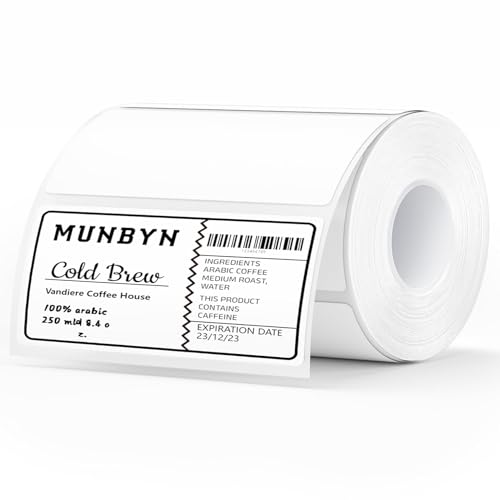
- 4" x 2" direct thermal labels
- Strong adhesive with perforation lines
- Waterproof, oil-proof, BPA/BPS-free
Best For: Bakeries needing durable ingredient and product labels
High-Volume Label Maker
Rollo USB Shipping Label Printer

- Fast direct thermal printing
- Creates custom product and barcode labels
- Works with Windows and Mac
Best For: Bakeries that need one versatile printer for labels and stickers
Square Sticker Rolls
2x2 Thermal Labels for Bakery Items

- 2" x 2" compact thermal labels
- Strong adhesive with perforation lines
- Clear printing, BPA/BPS-free
Best For: Bakeries using small containers and compact labeling
Multi-Platform Printer
Arkscan 2054A Thermal Label Printer
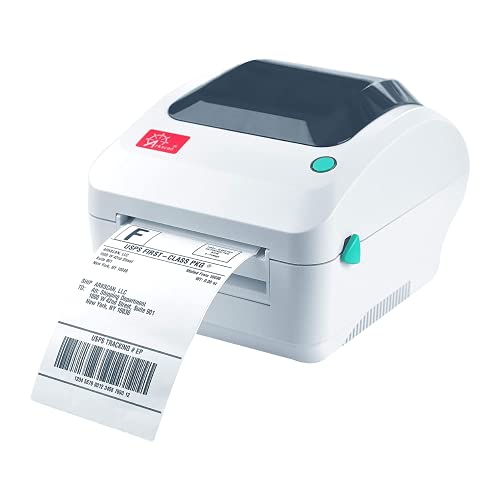
- Works with Windows, Mac, Chromebook, Android
- Prints labels from 0.75" to 4.25" wide
- Includes label design software and support
Best For: Bakeries needing a flexible printer for custom labels and barcodes
Freezer-Ready Choice
CLABEL 221B Low-Temp Label Printer

- Cryogenic adhesive for cold storage
- Crisp thermal text and barcodes
- Includes 3 rolls of freezer labels
Best For: Bakeries labeling chilled and frozen ingredients
Wireless All-Rounder
MUNBYN Bluetooth 4x6 Label Printer

- Bluetooth, USB, and Chrome workflows
- Wide label-size compatibility
- Templates, fonts, OCR, and import tools
Best For: Bakeries needing flexible multi-use label printing
Commercial Thermal Label Printer
MUNBYN Bluetooth Thermal Label Printer

- Prints 1.57" to 4.25" wide labels
- Works with phones, Windows, Mac, and Chromebook
- No ink required with quiet operation
Best For: Bakeries needing wider-format ingredient, inventory, and packaging labels
Versatile Bakery Label Printer
MUNBYN RW402B Bluetooth Thermal Printer

- Supports labels from 1.57" to 4.3"
- Works with app, web editor, and USB
- Auto size detection helps simplify setup
Best For: Bakeries needing one flexible printer for ingredient, packaging, and organization labels
Bakery Label Rolls – 4×2 Thermal Labels for Small Business
If you need ingredient label printers for bakeries, the right labels matter just as much as the printer. These MUNBYN 4″ x 2″ thermal labels are built for direct thermal printing, with strong adhesive, perforation lines, and waterproof, oil-proof stock that holds up in busy prep areas and on packaged baked goods.
Best For: Bakeries and small businesses that need durable 4×2 labels for ingredient, barcode, price, and inventory marking.
Pros:
- Strong adhesive helps labels stay put on packaging and other surfaces.
- Perforated rolls make labels easier to tear during fast-paced labeling.
- Waterproof and oil-proof material is practical for bakery environments.
- BPA/BPS-free paper supports safer everyday use.
Cons:
- Designed for thermal printers only, not laser or inkjet printers.
- Not compatible with Dymo and Brother printers.
For bakeries that want simple, durable label stock for ingredient stickers and product marking, this roll is a practical choice if you already use a compatible direct thermal printer.
High-Volume Label Maker – Rollo USB Shipping Label Printer
When evaluating ingredient label printers for bakeries, it helps to look for a machine that can also handle product, barcode, and custom stickers without fuss. The Rollo USB is a direct thermal printer for Windows and Mac that prints quickly, supports a wide label range, and works with custom label creation through its app.
Best For: Bakeries that want a fast, versatile thermal printer for labels, barcodes, and custom product stickers.
Pros:
- Direct thermal printing means no ink or toner to replace.
- Fast 150 mm/s speed supports higher-volume labeling.
- Can make custom labels, including product labels, QR codes, and name stickers.
- Compatible with major shipping and ecommerce platforms.
Cons:
- USB connection only, so setup depends on a connected computer.
- Best known for 4×6 shipping labels, so smaller bakery labels may need custom setup.
If your bakery needs one printer that can cover both back-of-house labeling and branded product stickers, this Rollo model offers useful speed and flexibility.
Square Sticker Rolls – 2×2 Thermal Labels for Bakery Items
For ingredient label printers for bakeries, smaller square labels can be ideal for jar lids, pastry boxes, and compact ingredient callouts. These MUNBYN 2″ x 2″ thermal labels use strong adhesive, perforated rolls, and clear direct thermal printing to keep small-format labeling simple and efficient.
Best For: Bakeries that need compact 2×2 labels for ingredient notes, price tags, and small package marking.
Pros:
- Compact 2″ x 2″ size suits small bakery containers and packaging.
- Strong adhesive helps labels stay secure on surfaces.
- Perforated rolls make tearing quick and convenient.
- BPA/BPS-free materials are a plus for food-adjacent workspaces.
Cons:
- Only works with direct thermal printers.
- Not compatible with Dymo and Brother printers.
If your bakery labels need to be small, clear, and easy to apply, this 2×2 roll is a straightforward option for compact product marking.
Multi-Platform Printer – Arkscan 2054A Thermal Label Printer
If you are comparing ingredient label printers for bakeries, a flexible printer that handles product labels and barcodes can simplify daily operations. The Arkscan 2054A is a direct thermal label printer that supports Windows, Mac, Chromebook, and Android, prints multiple label sizes, and includes BarTender UltraLite software for label design on Windows.
Best For: Bakeries that want a multi-device thermal printer for product labels, barcodes, and custom shelf markings.
Pros:
- Supports Windows, Mac, Chromebook, and Android via USB.
- Prints labels from 0.75″ to 4.25″ wide, covering many use cases.
- Includes BarTender UltraLite software for label design on Windows.
- US-based tech support can help with setup and troubleshooting.
Cons:
- USB connection limits placement flexibility.
- Best suited to users who are comfortable working from a computer or compatible device.
For bakeries that want broad compatibility and room to grow beyond basic labels, the 2054A is a capable choice for everyday labeling tasks.
Freezer-Ready Choice – CLABEL 221B Low-Temp Label Printer
If you need ingredient label printers for bakeries that can handle cold storage, the CLABEL 221B is built for low-temperature labeling on freezer and cooler containers. Its thermal printing keeps text and barcodes crisp without ink, and the included freezer labels are designed to stay put through moisture, grease, and temperature swings.
Best For: Bakeries labeling frozen fillings, chilled prep containers, and refrigerated ingredient bins.
Pros:
- Cryogenic adhesive bonds from -30°C to 60°C, helping labels stay attached in freezers and display coolers.
- Matte low-temperature thermal paper resists moisture, grease, and glare for clearer barcode scanning.
- Tear-resistant labels stay flexible in cold conditions, reducing cracking and brittleness.
- Includes 3 rolls of freezer-grade labels for cold, cooler, and dry storage use.
Cons:
- USB connectivity only, so it is less convenient for wireless workflows.
- Maximum label size is limited to 1.97 x 1.18 inches.
For bakeries that portion and store ingredients across chillers and freezers, this is a practical pick focused on adhesion and readability in cold environments. It is less of an all-purpose labeler, but strong where food storage conditions are demanding.
Wireless All-Rounder – MUNBYN Bluetooth 4×6 Label Printer
For ingredient label printers for bakeries that also need broader business labeling, the MUNBYN Bluetooth thermal printer offers flexible wireless printing and wide label compatibility. It supports mobile app printing, Chrome-based desktop design, and USB fallback, making it easy to produce ingredient, price, and barcode labels from different devices.
Best For: Bakeries that want one printer for ingredient labels, packaging, and general small-business labeling.
Pros:
- Bluetooth, USB, and Chrome-based workflows make setup flexible across phones, tablets, and computers.
- Supports a wide range of label sizes, including smaller rectangle labels and 4×6 shipping labels.
- Includes templates, fonts, OCR, and PDF/TXT import for custom label design.
- 203 dpi printing provides monochrome output for labels, QR codes, and barcodes.
Cons:
- It is optimized for general labeling rather than bakery-specific cold or moisture resistance.
- Some UPS thermal paper compatibility issues are noted.
This is a versatile option if your bakery needs one device for ingredient labels plus other operational labeling. It is strongest as a flexible everyday printer rather than a specialty freezer-label solution.
Compact Template Pick – PM240 Bluetooth Thermal Label Maker
The PM240 is a compact choice for ingredient label printers for bakeries that need quick custom labels for jars, containers, and retail packaging. It uses thermal printing, includes multiple label rolls, and supports both mobile Bluetooth printing and USB-connected PC use for a simple small-business workflow.
Best For: Small bakeries printing ingredient labels for jars, clear containers, and assorted product tags.
Pros:
- Supports 1″–2″ labels, including square, round, and transparent options for ingredient and container labeling.
- App features include templates, icons, fonts, Excel import, OCR, and batch printing.
- Built-in RFID label recognition can automatically detect supported label sizes.
- Portable design with rechargeable battery makes it easy to print away from a desk.
Cons:
- Best with the brand’s specialized labels for automatic recognition and error-free setup.
- Bluetooth and USB cannot be used at the same time.
If your bakery labels a mix of ingredient jars, clear containers, and small retail items, the PM240 offers a practical, portable toolset. It is especially appealing when you want design flexibility and compact size in one label maker.
Commercial Thermal Label Printer – MUNBYN Bluetooth Thermal Label Printer
If you need ingredient label printers for bakeries, this MUNBYN thermal printer is better suited to larger batch labels, order slips, and pantry or shipping-style labels than to tiny wraparound package stickers. It prints monochrome labels from 1.57″ to 4.25″ wide, pairs with phones and computers, and keeps setup straightforward with driver-free integration for major platforms.
Best For: Bakeries that want a reliable, no-ink thermal printer for wider ingredient, inventory, and packaging labels.
Pros:
- Supports label widths from 1.57″ to 4.25″ for flexible bakery labeling needs
- Driver-free setup works with FedEx, UPS, USPS, Amazon, Shopify, Etsy, and eBay
- Auto-calibration helps reduce misalignment and improve label accuracy
- Quiet 60 dB operation suits shared workspaces
Cons:
- Prints monochrome only, so it will not create color-coded labels
- May be more printer than needed if you only want very small ingredient stickers
- Primary design focus is shipping and general labels rather than kitchen-specific formats
For bakeries that print ingredients, inventory tags, and packaging labels in volume, this model offers strong compatibility and low-maintenance thermal printing. Its wider media support makes it the most adaptable of the three for practical back-of-house labeling.
Portable Kitchen Label Maker – Rongta R22 Bluetooth Label Maker
For ingredient label printers for bakeries, this Rongta handheld model is best when you want small, neat labels for jars, containers, bins, and prep-area organization. It prints labels up to 2″ wide, runs from a rechargeable battery, and uses a phone app with fonts, icons, and borders for quick custom labels.
Best For: Small bakeries that need a compact mobile label maker for ingredient jars, storage bins, and prep organization.
Pros:
- Portable 250g design is easy to carry around a busy kitchen
- App includes 40+ fonts, 1,000+ icons, and 230+ borders
- 203 dpi output delivers clear black-and-white labels
- Rechargeable battery supports up to 4 hours of printing per charge
Cons:
- Does not work with computers, only iOS and Android via Bluetooth
- Maximum label width is 2.13″, so it is not ideal for larger bakery packaging labels
- Prints black and white only
This is a good pick if your bakery labeling needs are more about organization than shipping. It is compact, customizable, and simple to use, but its small format makes it better for containers and shelves than for broad ingredient panels.
Versatile Bakery Label Printer – MUNBYN RW402B Bluetooth Thermal Printer
If you’re comparing ingredient label printers for bakeries, this MUNBYN RW402B stands out for its broad size support and easy app-based design tools. It handles labels from 1.57″ to 4.3″, works with phones and desktops, and offers template and font options that make it practical for ingredient, branding, and organization labels.
Best For: Bakeries that want a versatile thermal label printer for ingredient labels, packaging, and back-of-house organization.
Pros:
- Auto size detection helps recognize labels from 1.57″ to 4.3″
- MUNBYN Print app and web editor offer templates, fonts, and design elements
- Compatible with iPhone, Android, Windows, Mac, and Chromebook
- MicroJam Technology is designed to keep jams under 0.01%
Cons:
- Monochrome printing only, so it cannot produce color labels
- Transparent labels may be incompatible
- Like most thermal printers, it is not intended for decorative full-color packaging
This model is the most flexible choice in the group if your bakery needs one printer to handle multiple label sizes. It balances broad compatibility with low-maintenance thermal printing, making it useful for both ingredient workflows and general business labeling.
How We Picked the Best Ingredient Label Printers for Bakeries
We focused on Ingredient Label Printers for Bakeries that are easy to set up, work with common label sizes, and fit the workflow of small production kitchens, retail counters, and prep stations. Priority went to thermal printers and compact label makers that reduce maintenance and keep labeling fast.
We also considered platform compatibility, adhesive quality, portability, and whether the printer could support ingredients, allergen notices, batch codes, or use-by dates without creating cluttered labels.
Quick Comparison
If you need standard package and shelf labels, 4×6 thermal printers are the most versatile. For jars, clamshells, tasting cups, and smaller bakery items, compact printers and smaller label formats can be a better fit. Bluetooth and mobile support are useful if you label from the floor or need to move between prep areas.
Key Buying Factors for Ingredient Label Printers for Bakeries
Label Size and Format
Match the printer to your packaging. Larger labels work well for shipping and bulk cases, while smaller labels are better for ingredient panels, price stickers, and small containers. Make sure the printer supports the sizes you use most often.
Print Quality and Thermal Type
Direct thermal printing is usually the easiest choice for bakeries because it avoids ink, toner, and ribbons. Look for crisp text and barcodes so ingredient lists, allergens, and dates stay readable.
Software and Device Compatibility
Check whether the printer works with your operating system and devices. If your team uses phones or tablets, Bluetooth and app support can streamline label creation. If you rely on a desktop workflow, USB models may be simpler.
Durability and Food-Prep Use
Bakery environments can be warm, humid, and fast-moving. Choose labels with adhesive that sticks to paper boxes, plastic tubs, and bags. For chilled or frozen items, confirm the labels are suited to low temperatures.
Workflow Speed
For high-volume baking, speed matters. A printer that loads quickly and prints consistently can save time during morning prep, closing, and batch changes.
Who Should Buy Which Ingredient Label Printers for Bakeries?
Small home bakeries and cottage bakers often do best with compact, budget-friendly printers for basic ingredient and date labels. Retail bakeries and multi-station kitchens may prefer faster thermal models with broader label-size support and stronger device compatibility.
If you label a mix of retail packs, ingredient bins, and outbound boxes, choose a flexible printer that can handle both small-format labels and standard shipping-style labels. That gives you one system for most bakery labeling tasks while keeping operations simple.