Oven temperature data loggers help you verify real heat conditions instead of relying on the dial alone. That means better consistency for baking, roasting, smoking, and foodservice monitoring.
Below, we focus on models that balance accuracy, probe options, recording capacity, and easy data export so you can choose the right logger for your setup.
Best 10 Oven Temperature Data Loggers Picks for 2026
Multi-Channel Data Logger
4-Channel K/J/T Thermometer with USB Export

- 4 channels for simultaneous or single-channel monitoring
- Stores 5,000 groups and exports unlimited logs to PC
- Supports K, J, and T thermocouples with alarms
Best For: Multi-point temperature logging in HVAC, ovens, and refrigeration
Kitchen Oven Monitor
Stainless Steel Oven/Grill/Smoker Thermometer
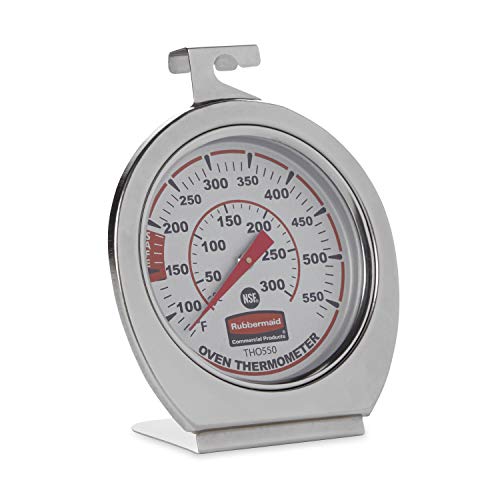
- Battery-free analog thermometer for instant readings
- NSF certified stainless steel build with shatter-proof lens
- Safe for ovens, grills, smokers, and toaster ovens
Best For: Battery-free oven checks in kitchens and food-service settings
SD Card Recorder
4-Channel K-Type Logger with 8G SD Card

- 4-channel logging with independent alarms
- Unlimited logging based on SD card memory
- Includes 8G card, 2 probes, and 4 AA batteries
Best For: Desktop monitoring with expandable SD card logging
Easy-Read Oven Gauge
431 Stainless Steel Oven Thermometer

- Bold dial and tempered glass improve readability
- 100 to 600°F range for baking, grilling, and smoking
- Hooks and base allow hanging or rack placement
Best For: Quick visual oven temperature checks without batteries
Four-Channel Oven Monitoring Pick
4-Channel Thermocouple Thermometer Data Logger

- 4 channels for simultaneous point checks
- USB PC logging plus 5,000-record onboard memory
- K/J/T support with audible and visual alarms
Best For: multi-point oven and furnace temperature monitoring
High-Capacity Alarm Logger
Thermocouple Temperature Data Logger

- Records up to 48,000 temperature groups
- Exports CSV data without extra software
- Buzzer and visible alarm for threshold alerts
Best For: longer oven temperature logging with easy export
Dual-Probe Auto-Report Logger
Tzone Thermocouple Data Logger

- Dual-channel logging with K/T/J support
- Auto-generates TXT, CSV, XLS, and PDF reports
- Stores up to 61,440 temperature records
Best For: portable two-point oven and lab logging
Dual-Channel Thermocouple Meter

- Reads two channels at once for temperature comparison.
- Wide range suits high-heat oven and industrial checks.
- Includes alarms, data hold, and MAX/MIN/AVG tracking.
Best For: Comparing two oven points or monitoring hot equipment with a handheld dual-channel meter.
4-Channel USB Logger
Tzone K Type Thermocouple Recorder

- Logs four channels and supports K/T/J sensors.
- USB auto-report generation works without software.
- Stores up to 49,920 readings with alarms.
Best For: Multi-channel oven monitoring and automatic report generation without extra software.
Bluetooth App Logger
Elitech 2-Channel Thermocouple

- Bluetooth app shows live graphs and exports reports.
- Two channels support T1/T2 comparison and logging.
- Includes calibration support and long battery life.
Best For: Real-time oven monitoring with Bluetooth app access and downloadable reports.
Multi-Channel Data Logger – 4-Channel K/J/T Thermometer with USB Export
If you need oven temperature data loggers that can handle more than one point at a time, this 4-channel thermocouple meter is built for multi-probe monitoring. It supports K, J, and T type thermocouples, records up to 5,000 groups of data in the meter, and can export unlimited logs to a Windows PC via USB software.
Best For: Users who need simultaneous multi-point temperature logging for HVAC, ovens, labs, or refrigeration checks.
Pros:
- 4 channels let you monitor multiple probes at once or use a single channel as needed.
- Stores up to 5,000 groups internally and supports unlimited PC logging through USB software.
- Wide measurement ranges cover demanding jobs like HVAC, microwave ovens, aquariums, and refrigeration.
- Includes alarm functions, data hold, max/min/average, backlit LCD, and adjustable compensation.
Cons:
- Requires thermocouples and PC software for full logging workflow.
- Best suited to technical temperature monitoring rather than simple kitchen use.
Overall, this is the most flexible option here if your priority is recording and reviewing temperature across several points. It combines broad thermocouple support with practical logging and alarm features for serious monitoring tasks.
Kitchen Oven Monitor – Stainless Steel Oven/Grill/Smoker Thermometer
For straightforward oven temperature data loggers in a mechanical format, this stainless steel monitoring thermometer is a simple way to check true oven heat at a glance. It is designed for ovens, grills, smokers, and other heat-based food appliances, with an easy-read dial that works without batteries.
Best For: Home cooks and food service users who want a battery-free oven temperature check for cooking equipment.
Pros:
- Mechanical design reads instantly and does not require batteries.
- Works in traditional ovens, toaster ovens, grills, smokers, and similar appliances.
- Stainless steel build with a shatter-proof lens for dependable use.
- NSF certified and intended for food-safe kitchen environments.
Cons:
- Analog display is less data-rich than digital logging thermometers.
- Temperature range starts at 60°F, so it is not for low-temp monitoring below that point.
This is a practical pick if you want a durable, no-fuss thermometer for verifying oven heat during everyday cooking. It focuses on reliability and food-safe use rather than recording data over time.
SD Card Recorder – 4-Channel K-Type Logger with 8G SD Card
This 4-channel recorder is a strong fit if you want oven temperature data loggers with long-term storage and independent alarms. It offers real-time display, programmable sampling from 1 second up, unlimited manual memory, and logging that depends on SD card capacity.
Best For: Users who want a desktop-style thermocouple logger with SD card storage and independent channel alarms.
Pros:
- 4 channels can be alarmed independently with programmable high/low limits.
- Unlimited manual memories and unlimited auto logging depend on SD card space.
- Includes an 8G SD card, two K-type thermocouples, and four AA batteries.
- Large LCD, backlight, and real-time clock make logged readings easier to track.
Cons:
- Best suited to indoor use and desktop-style monitoring.
- Only two thermocouples are included despite the 4-channel design.
For users who value expandable logging over a basic display, this model offers a lot of practical flexibility. The SD-card workflow and independent alarms make it useful for repeated monitoring jobs where stored records matter.
Easy-Read Oven Gauge – 431 Stainless Steel Oven Thermometer
If you just need a simple way to verify oven heat, this analog gauge fits the role well among oven temperature data loggers and oven thermometers. It covers 100 to 600°F, uses bold markings for readability, and can hang or stand securely inside an oven or on a rack.
Best For: Bakers and cooks who want a durable, easy-to-read oven thermometer for gas or electric ovens.
Pros:
- Clear bold print and colored dial are easier to read inside a hot oven.
- Wide 100 to 600°F range suits baking, grilling, smoking, and roasting.
- 431 stainless steel construction is oven safe and built for durability.
- Can be hung or placed on a rack with the included hooks and base.
Cons:
- Analog design does not log data or connect to software.
- Temperature range begins at 100°F, so it is not ideal for low-heat use.
This is a good no-battery option when the priority is quick visual oven temperature checks rather than recorded data. It is especially useful if you want a sturdy thermometer that stays readable in a hot oven.
Four-Channel Oven Monitoring Pick – 4-Channel Thermocouple Thermometer Data Logger
If you need oven temperature data loggers for tracking multiple hot zones at once, this 4-channel thermocouple meter is built for broad coverage. It supports K, J, and T type probes, logs to a PC over USB, and also stores up to 5,000 data groups on the device for short- or long-term temperature checks.
Best For: Users who want a four-channel logger for ovens, furnaces, HVAC, and other multi-point temperature jobs.
Pros:
- 4-channel design monitors several points simultaneously.
- USB logging works with Windows PCs and supports export/chart generation.
- Built-in memory stores up to 5,000 data groups.
- Audible and visual HI/LOW alarms help catch out-of-range oven temperatures fast.
Cons:
- K-type probes included in the set are limited to lower temperature ranges than the meter itself.
- PC logging is tied to Windows compatibility.
- Best suited to thermocouple-based setups, so it is not a universal temperature tool.
This is a practical choice if you need flexible monitoring with alarms, broad probe compatibility, and both portable memory and USB logging in one handheld unit.
High-Capacity Alarm Logger – Thermocouple Temperature Data Logger
For shoppers comparing oven temperature data loggers, this 4-channel model stands out for its large recording capacity and simple CSV export. It records up to 48,000 groups, offers adjustable sampling rates, and includes buzzer plus visible alarms for faster response when temperatures move outside your set limits.
Best For: Buyers who want a high-capacity thermocouple logger with straightforward PC export and alarm alerts.
Pros:
- Stores up to 48,000 groups of temperature data.
- PC export works in CSV format without software.
- Buzzer and red-light alarm warn when temperatures cross thresholds.
- USB-C rechargeable design adds convenience for repeated use.
Cons:
- The included K-type probes have a narrower range than the main unit.
- Limited to 4 channels, so it is not ideal for very large multi-point setups.
- Temperature offset compensation range is modest compared with some specialized systems.
If you need a log-heavy thermometer for longer tracking sessions, this one is a strong fit thanks to its large record count, clear alarm behavior, and easy file export.
Dual-Probe Auto-Report Logger – Tzone Thermocouple Data Logger
This dual-channel option is a good fit if you want oven temperature data loggers with simple reporting and easy daily handling. It records two channels at once, supports K/T/J sensors, and can automatically generate TXT, CSV, XLS, and PDF reports when connected to a PC by USB.
Best For: Users who want a portable dual-probe logger for ovens, HVAC, labs, and industrial temperature checks.
Pros:
- Dual-channel logging captures two temperature points at the same time.
- Auto report generation supports TXT, CSV, XLS, and PDF output.
- Large capacity stores up to 61,440 records.
- Includes 1.5 m external K-type probes for harder-to-reach spots.
Cons:
- Only two channels, so it is less suited to broader multi-point oven monitoring.
- Included probes are rated to 300°C, which may be limiting for some high-heat applications.
- Uses AA batteries rather than a rechargeable pack.
For users who value easy report creation and a very large data history, this logger is a practical, flexible choice that still stays compact and handheld.
Dual-Channel Thermocouple Meter – Dual-Channel K/J Thermometer
If you need oven temperature data loggers for fast spot checks rather than long-term recording, this dual-channel K/J thermocouple thermometer is built for practical temperature comparisons. It reads two probes at once, includes high/low alarms, and supports data hold plus MAX/MIN/AVG tracking, which makes it useful for checking temperature spread in ovens, HVAC work, and other high-heat applications.
Best For: Comparing two oven points or monitoring hot equipment with a handheld dual-channel meter.
Pros:
- Dual-channel design lets you compare T1 and T2 simultaneously.
- Wide measurement range covers extreme oven and industrial temperatures.
- Hi/Lo alarm, data hold, and MAX/MIN/AVG improve quick checks.
- Includes multiple thermocouple probes and a backlit display for dark areas.
Cons:
- Does not store logged history like a dedicated recorder.
- Battery-powered handheld format is less suited to fixed installations.
This is a strong choice when your workflow calls for immediate oven temperature comparison and reliable handheld readings, not automated logging. The calibration adjustment and broad probe support add flexibility for general shop or lab use.
4-Channel USB Logger – Tzone K Type Thermocouple Recorder
For buyers comparing oven temperature data loggers, this 4-channel K type thermocouple recorder stands out for simultaneous multi-point monitoring and built-in reporting. It supports K/T/J sensors, records up to 49,920 groups, and can automatically generate a data report through USB, making it a practical pick for ovens, furnaces, HVAC, labs, and other high-temperature environments.
Best For: Multi-channel oven monitoring and automatic report generation without extra software.
Pros:
- Four-channel logging lets you track multiple points at the same time.
- USB connection can automatically generate reports with no software required.
- Large storage capacity supports long recording sessions.
- Sound alarm, backlit screen, and adjustable settings add convenience.
Cons:
- Included sensor temperature range is limited to 0°C to 300°C.
- Bulky handheld design may be less convenient than a compact probe-only logger.
This model makes sense if you want a recorder that can capture oven temperature data across several channels and quickly turn it into a report. Its mix of multi-channel logging, alarms, and configurable parameters makes it a versatile monitoring tool for industrial users.
Bluetooth App Logger – Elitech 2-Channel Thermocouple
If you want oven temperature data loggers with app-based viewing, this Bluetooth Elitech thermometer is designed around real-time tracking and flexible record keeping. It samples every second, shows live graphs in the Elitech Tools app, and can generate CSV or PDF reports, which is helpful when you need easier documentation for oven, HVAC, lab, or freezer monitoring.
Best For: Real-time oven monitoring with Bluetooth app access and downloadable reports.
Pros:
- Bluetooth app displays live temperature graphs and supports CSV/PDF reports.
- Two channels plus difference value between T1 and T2.
- Supports temperature calibration and ADJ compensation.
- Battery life is listed at up to 150 hours with included AA batteries.
Cons:
- Included thermocouples are limited to -58 to 482°F, below some high-heat logger options.
- Full offline record and alarm-limit features require app unlocking.
This is a good fit if you want a modern monitoring setup with phone-based visibility instead of a standalone recorder-only device. The app workflow, dual channels, and report export make it especially appealing for recurring oven documentation.
How We Picked These Oven Temperature Data Loggers
We looked for Oven Temperature Data Loggers that are practical for everyday cooking and monitoring, with enough durability and temperature range for ovens, grills, smokers, and general foodservice use. Priority went to clear displays, reliable thermocouple compatibility, usable logging capacity, and export or reporting features that make the recorded data easy to review.
Quick Comparison
Some buyers need a simple in-oven thermometer for quick checks, while others need multi-channel logging for tracking several probes at once. The main difference across these picks is whether you want basic temperature reading, continuous recording, or a more advanced logger with USB or Bluetooth access.
Key Buying Factors for Oven Temperature Data Loggers
Temperature Range and Probe Type
Make sure the logger supports the temperatures you actually cook at. For high-heat ovens or smoking sessions, thermocouple-based Oven Temperature Data Loggers with K, J, or T type support are usually the most flexible. Check probe compatibility as well, since some units include probes and others require separate purchases.
Channel Count and Logging Capacity
If you only need one measurement point, a single- or dual-channel unit may be enough. For monitoring oven air temperature plus food temperature, or several zones at once, choose a 4-channel logger. Higher data capacity matters if you want longer recording sessions without frequent downloads.
Readability and Data Export
A clear display helps with live monitoring, but export options are just as important if you need records for quality control. USB and Bluetooth models are especially useful when you want to review trends, share reports, or document performance over time.
Build Quality and Use Case
For home kitchens, a straightforward thermometer may be enough. For commercial kitchens, labs, or repetitive testing, look for sturdier construction, stable probe connections, and logging software that fits your workflow.
Who Should Buy Which Oven Temperature Data Loggers?
Home bakers and casual cooks should look for easy-to-read oven thermometers or simple loggers with basic recording. Serious BBQ and smoker users will usually benefit from dual- or multi-channel thermocouple models. Foodservice teams, technicians, and anyone who needs records should prioritize Oven Temperature Data Loggers with larger storage, export support, and consistent probe compatibility.
In short, choose the simplest model that still gives you the accuracy, probe count, and reporting features your routine demands.