A compact bread proofing box can make fermentation more predictable when your kitchen is cool, dry, or short on counter space. The right model provides steady warmth for dough and sourdough starters without requiring a dedicated appliance.
These 10 picks cover folding designs, broad temperature ranges, extended timers, multiple heating configurations, and different capacity levels. Use the guide below to match features with your baking routine.
Best 10 Compact Bread Proofing Boxes Picks for 2026
Best XL Folding Proofer
Extra Large Folding Bread Proofing Box
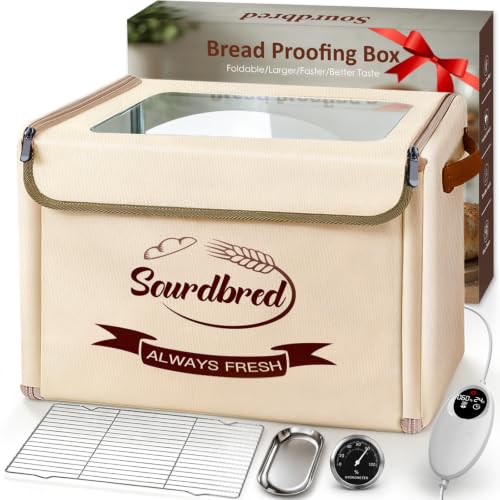
- 66–108°F control with a 1–48-hour timer
- Large interior with rack and water tray
- Folds to 2 inches for storage
Best For: Large batches and multi-purpose fermentation
Best Simple Insulated Box

- Designed for a 10 × 21-inch warming mat
- Compact and lightweight for storage
- Smooth interior wipes clean
Best For: Buyers building a modular proofing setup
Best Temperature Range
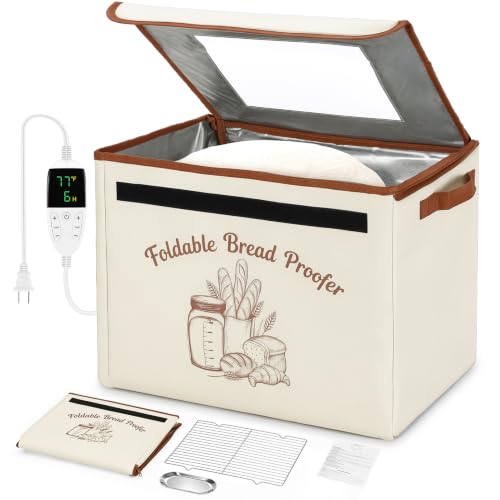
- 50–122°F control with 1–48-hour presets
- Water tray and stainless-steel rack included
- Folds flat with a clear viewing window
Best For: Flexible sourdough and bread fermentation
Best Humidity Monitoring
MQUPIN Folding Bread Proofing Box

- ±1°F control from 68–131°F
- Built-in humidity gauge and 0–99-hour timer
- Foldable box with rack and water pan
Best For: Bakers tracking temperature and humidity together
Best Extra-Large Pick
Four-Side Heated XL Bread Proofer

- Fits two 9-inch round bannetons
- Four-side heating with 68–131°F control
- Includes rack, mat, water tray, and hygrometer
Best For: Multiple sourdough loaves and larger batches
Best Space-Saving Value
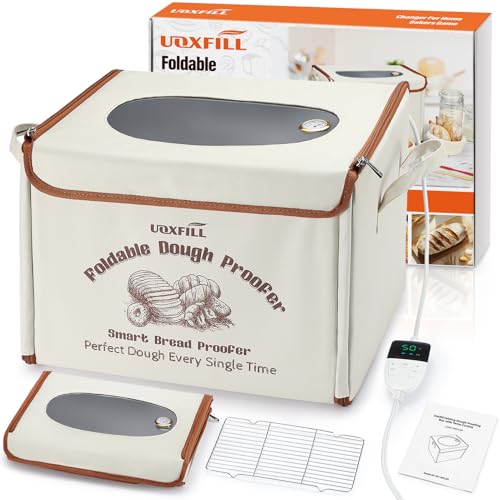
- Folds flat for compact storage
- 50–122°F control with a 48-hour timer
- Includes auto-shutoff, shelf, window, and hygrometer
Best For: Small kitchens and flexible fermentation tasks
Best Precision Control
Granura Home Sourdough Proofer

- 1°F temperature adjustments from 50–130°F
- 99-hour timer and continuous mode
- Folds flat and includes rack, gauge, and window
Best For: Precise sourdough and cultured-food fermentation
Best Foldable Temperature-Controlled Proofer

- 50–113°F adjustable temperature range
- Timer supports up to 48 hours
- Foldable design with viewing window
Best For: Home bakers needing extended timer control and easy storage
Best Accessory-Rich Proofer
Compact Bread Proofing Box for Batch Baking
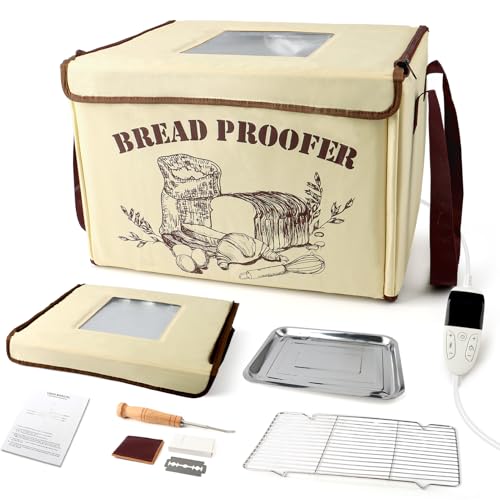
- 36-liter interior for multiple batches
- Three-side heating from 50–113°F
- Includes rack, humidifier, knife, and tray
Best For: Batch baking and versatile home fermentation
Best Smart-Sensor Proofer
Compact Bread Proofing Box for Fermentation

- Built-in NTC sensor tracks temperature changes
- 50–113°F control with a 24-hour timer
- Roomy foldable interior for multiple containers
Best For: Space-conscious bakers seeking sensor-assisted fermentation control
Best XL Folding Proofer – Extra Large Folding Bread Proofing Box
For bakers comparing compact bread proofing boxes, this model offers generous interior capacity while folding to just 2 inches for storage. Its adjustable 66–108°F temperature range, timer, insulation, and included rack and water tray make it a versatile option for controlled dough fermentation.
Best For: Home bakers who need extra room for large bowls, multiple bottles, or several fermentation projects but still want a foldable design.
Pros:
- Large 16.5 × 12 × 12-inch interior with space for one large bowl and four large bottles.
- Three-sided heating, five-layer insulation, and a 66–108°F temperature range.
- Includes a metal rack, water tray, controller, and large viewing window.
- Folds to approximately 2 inches and has two carry handles.
Cons:
- Hand-wash care is required.
- The large unfolded footprint may be more than smaller kitchens need.
This is a strong choice when capacity matters as much as storage efficiency. It also supports sourdough starter, pizza dough, yogurt, kombucha, butter, and chocolate, making it more versatile than a dough-only proofer.
Best Simple Insulated Box – Cozy Bread Proofing Box
This compact bread proofing box is a lightweight insulated enclosure designed to work with a 10 × 21-inch warming mat. It provides a contained environment for sourdough and artisan dough, but the heat mat is not included, so buyers should plan for the compatible accessory.
Best For: Bakers who already own, or plan to purchase, a compatible 10 × 21-inch warming mat and want a portable insulated enclosure.
Pros:
- Compact 10 × 21 × 9-inch design that is easy to transport and store.
- Insulated construction helps retain warmth from a compatible heat mat.
- Smooth interior surface is designed for easy wipe-down cleaning.
- Lightweight at approximately 0.37 kg.
Cons:
- Heat mat is not included.
- It is a proofing box, not a standalone bread warmer.
- Designed primarily for bread-related proofing rather than broader fermentation uses.
The Cozy Bread box is best viewed as a modular proofing setup rather than an all-in-one appliance. Its appeal is the simple, portable enclosure, provided the required warming mat is available.
Best Temperature Range – Folding Bread Proofing Box
Among compact bread proofing boxes, this folding model stands out for its broad 50–122°F temperature range and straightforward timer controls. A water tray, stainless-steel rack, viewing window, and five-layer insulation support more consistent proofing without requiring frequent opening.
Best For: Sourdough and bread bakers who want flexible temperature presets, automatic shutoff, and enough room for bowls, containers, or starter jars.
Pros:
- Seven temperature settings from 50–122°F and timer presets from 1–48 hours.
- Water tray helps add moisture and reduce surface drying.
- Includes a removable stainless-steel rack and clear top window.
- Folds for storage and uses durable 1000D Oxford fabric with five-layer insulation.
Cons:
- Timer settings are preset rather than continuously adjustable.
- After unplugging or a power outage, it defaults to 77°F with no timer selected.
- Hand-wash care may be less convenient than machine-washable alternatives.
This model balances usable capacity with storage-friendly construction. Its low-temperature options suit sourdough starter and dough, while higher settings can support yogurt or natto when they fit the recipe.
Best Humidity Monitoring – MQUPIN Folding Bread Proofing Box
This compact bread proofing box adds humidity monitoring to its temperature-controlled design. It offers ±1°F temperature precision, a built-in humidity gauge, a 0–99-hour timer, and a foldable 15.7 × 11.8 × 11.8-inch enclosure for kitchens where storage space is limited.
Best For: Bakers who want to monitor both temperature and humidity while proofing sourdough, bread, pizza dough, or other fermented foods.
Pros:
- Digital control provides ±1°F temperature precision across 68–131°F.
- Built-in humidity gauge helps monitor the proofing environment.
- 0–99-hour countdown timer automatically stops heating when complete.
- Includes a stainless-steel bracket, thermometer, and water pan, and folds for storage.
Cons:
- Its 68°F minimum is warmer than some proofers designed for cooler fermentation.
- The notes do not specify a separate included controller or detailed timer increments.
- The stated large capacity may still require dedicated cabinet or hanging storage when folded.
The MQUPIN is the most measurement-focused option in this group. Its humidity gauge and precise digital temperature control are useful for bakers who want more visibility into changing proofing conditions.
Best Extra-Large Pick – Four-Side Heated XL Bread Proofer
If you need compact bread proofing boxes but still want room for multiple loaves, this foldable extra-large model offers a useful balance. Its 22-by-12-by-12-inch interior can hold two 9-inch round bannetons or a round and oval banneton, while four-side heating helps distribute warmth more evenly.
Best For: Home bakers proofing multiple sourdough loaves or larger batches at once.
Pros:
- Extra-large interior accommodates multiple bannetons.
- Four-side heating helps reduce cold zones.
- 68–131°F temperature range and a 0–99-hour timer.
- Includes a rack, silicone mat, water tray, hygrometer, and storage bag.
Cons:
- Larger footprint than more compact proofing boxes when unfolded.
- Its broad feature set may be more than occasional bakers need.
The seven-layer insulation and clear viewing window support stable, easy-to-monitor fermentation. Choose it when capacity and even warmth matter more than minimizing counter space.
Best Space-Saving Value – Folding 3-Sided Bread Proofer
Among compact bread proofing boxes, this folding model stands out for storage convenience and straightforward controls. It provides three-sided heating, a 50–122°F temperature range, and a 0–48-hour timer, then folds flat when your baking session is over.
Best For: Bakers who want a capable proofer that stores easily in a small kitchen.
Pros:
- Folds flat for space-saving storage.
- Three heating zones provide surrounding warmth.
- Includes a 4-hour auto-shutoff when no timer is set.
- Viewing window, hygrometer, waterproof interior, and stainless steel shelf aid monitoring and cleanup.
Cons:
- 48-hour timer is shorter than the 99-hour timers on some alternatives.
- Its 15.7-by-11.8-by-11.8-inch interior is less spacious than the XL option.
This is a practical pick for regular home use, especially when storage space is limited. Its additional fermentation uses, including yogurt and kombucha, add versatility beyond bread dough.
Best Precision Control – Granura Home Sourdough Proofer
For bakers comparing compact bread proofing boxes by temperature precision, this model offers 1°F adjustments from 50–130°F and a sensor designed to read the air around the dough. It folds flat, fits a large bowl or two bannetons, and supports both timed and continuous fermentation.
Best For: Sourdough bakers who want fine temperature control for dough, starters, and cultured foods.
Pros:
- Adjusts temperature in exact 1°F increments.
- 0–99-hour timer plus continuous mode supports long ferments.
- Three-sided heating maintains the selected temperature within 2°F, according to the supplied notes.
- Includes a stainless steel rack, humidity gauge, viewing window, and automatic shutoff.
Cons:
- Three-sided heating may be less uniform than four-side heating.
- Its feature-rich controls may be unnecessary for simple proofing routines.
The air-reading thermostat, humidity gauge, and long timer make this a strong choice for repeatable fermentation. It is particularly useful if you also make yogurt, kefir, kombucha, natto, or tempeh.
Best Foldable Temperature-Controlled Proofer – Compact Bread Proofing Box
This compact bread proofing box combines adjustable 50–113°F temperature control with a 48-hour timer, making it a practical choice for bakers who want more control over sourdough, pizza dough, yogurt, and starters. Its foldable design and viewing window also suit kitchens where storage space matters.
Best For: Home bakers who want extended timer settings, flexible temperature control, and easy storage.
Pros:
- Three heating zones help provide even warming.
- Temperature adjusts from 50–113°F, with a timer up to 48 hours.
- Foldable construction, insulated layers, and a viewing window support convenient use and storage.
- Includes a metal rack and enough space for one standard proofing bowl.
Cons:
- The listed interior capacity is suited to one standard proofing bowl rather than several batches.
- Its 11 x 15 x 11-inch footprint still requires dedicated counter space while in use.
Choose this model if a long timer and foldaway storage are higher priorities than maximum batch capacity. The insulated fabric construction and multi-zone heating make it a versatile option for everyday fermentation tasks.
Best Accessory-Rich Proofer – Compact Bread Proofing Box for Batch Baking
For shoppers comparing compact bread proofing boxes, this foldable model stands out with 36 liters of capacity, three-side heating, and a 24-hour timer. Its five-layer insulation, humidifying box, and included accessories make it useful for bread dough as well as several low-temperature fermentation projects.
Best For: Home bakers who need room for multiple dough batches and appreciate a complete accessory kit.
Pros:
- Three-side surround heating and adjustable 50–113°F control support steady fermentation.
- 36-liter capacity accommodates multiple dough batches.
- Includes a stainless steel rack, humidifying box, bread knife, and tray.
- Foldable construction, viewing window, waterproof lining, and overheat protection add convenience.
Cons:
- The 24-hour timer is shorter than the 48-hour timer on some competing models.
- At 15.7 inches wide and 15.7 inches high, it may need more storage space than smaller proofers.
- Its accessory-heavy design weighs 3.8 pounds.
This is a strong fit when batch capacity and included extras matter most. The humidifying box is particularly helpful for longer fermentation periods because it helps prevent the dough surface from drying out.
Best Smart-Sensor Proofer – Compact Bread Proofing Box for Fermentation
This compact bread proofing box offers a roomy foldable interior for multiple dough bowls or yogurt containers while keeping controls straightforward. Its 50–113°F temperature range, 24-hour timer, and built-in NTC sensor make it a flexible option for sourdough, yogurt, pizza dough, and other fermentation projects.
Best For: Space-conscious home bakers who want batch capacity and sensor-assisted temperature consistency.
Pros:
- 15.8 x 11.8 x 11.8-inch interior provides space for multiple containers.
- Digital controls allow 50–113°F temperature settings and timers up to 24 hours.
- NTC sensor monitors temperature changes in real time.
- Foldable zippered design and transparent viewing window simplify storage and monitoring.
Cons:
- The timer tops out at 24 hours, limiting longer unattended fermentation schedules.
- The supplied notes do not specify a metal rack or humidifying accessory.
- Its larger interior may be more capacity than needed for single-loaf baking.
This model balances capacity, portability, and control without requiring assembly. It is especially appealing for users who want one foldable appliance for dough, cultured foods, and selected DIY applications such as filament drying.
How We Picked the Best Compact Bread Proofing Boxes
We focused on the features that most directly affect proofing consistency and daily usability: temperature range, control accuracy, timer flexibility, heating layout, interior capacity, portability, and storage. Models with folding frames can be especially useful for home bakers who need to clear counter space between batches.
We also considered whether a box is suited to basic dough proofing, sourdough starter maintenance, or longer warming tasks. Since included accessories vary, check each listing carefully for racks, mats, trays, power requirements, and stated interior dimensions.
Quick Comparison
| Feature | What to compare | Best for |
|---|---|---|
| Temperature range | Low, adjustable warmth suited to fermentation | Consistent dough and starter activity |
| Timer | Short auto-shutoff or extended 48- to 99-hour operation | Different schedules and overnight projects |
| Heating design | Single, three-side, or four-side heating | More even warming across larger spaces |
| Foldable construction | Collapsible body and compact storage | Small kitchens and occasional bakers |
| Capacity | Interior dimensions and rack configuration | One loaf, multiple containers, or large dough batches |
Key Buying Factors for Compact Bread Proofing Boxes
Temperature Control
Look for a low minimum temperature and adjustable settings rather than a simple on/off warmer. A broad range gives you more flexibility for bulk fermentation, final proofing, and keeping a sourdough starter active. Use an independent thermometer if precise temperature matters, since displayed and actual temperatures can differ.
Size and Interior Layout
Measure the bowls, bannetons, jars, and baking vessels you plan to use. “Extra large” labels are not standardized, so interior measurements are more useful than the name. A rack can improve organization, but it may reduce usable height for tall containers.
Timer and Safety Features
A 48-hour timer works well for flexible fermentation schedules, while a short auto-shutoff can be preferable when you want a simpler safety limit. Confirm whether the timer controls heating or only displays elapsed time, and follow the manufacturer’s instructions for unattended operation.
Heating and Storage
Three- or four-side heating may help distribute warmth more evenly, particularly in larger boxes, though placement and room temperature still matter. Foldable models are easier to store, but inspect hinges, panels, and the power connection for sturdy construction.
Who Should Buy Which Compact Bread Proofing Boxes?
Choose a basic folding model if you want an affordable proofing space that can be packed away after use. These are practical for occasional bread bakers and kitchens with limited counter space.
Choose a wide-temperature model if you regularly switch between dough, sourdough starter, yogurt, or other controlled warming tasks. More adjustment gives experienced bakers greater control over fermentation speed.
Choose an extra-large box if you proof multiple containers, large dough batches, or tall vessels. Verify the interior dimensions before buying, especially if you use a Dutch oven, large banneton, or several jars at once.
Choose extended-timer or multi-side-heating designs for frequent baking and longer fermentation schedules. They can reduce monitoring, but stable results still depend on dough temperature, starter strength, recipe timing, and room conditions.